How to Stretch Shoes at Home: Fast, Effective Methods
There’s nothing quite like the squeeze of a brand-new pair of shoes that seemed perfect in the store. The quick fix might be sitting in your kitchen right now: a freezer bag, some rubbing alcohol, or even a rolled-up pair of socks can add enough room to save shoes that would otherwise end up back in the box. This guide runs through the fastest home stretches, what cobblers actually use to stretch shoes, and which methods to skip for delicate leather.
Common home methods: 10+ documented by retailers and forums · Fastest fix: 5–30 minutes with alcohol spray and thick socks · Pro tool: Shoe stretcher with stretch spray
Quick snapshot
- Freezer method works overnight via water expansion (Teri Edmonds)
- Shoe stretcher + spray achieves results in 8–48 hours (FootFitter)
- Alcohol-water spray loosens leather in 20 minutes (Healthline)
- Whether home methods reliably produce more than half a size gain
- How repeated stretching affects shoe longevity over months of use
- Wet newspaper effectiveness on non-canvas materials
- Spray-and-wear: results in under an hour
- Freezer/overnight methods: results by morning
- Cobbler turnaround: typically 1–2 days with motorized machines
- Choose method based on your shoe material and how much time you have
- Combine approaches for stubborn tightness
- Know when to hand shoes to a cobbler instead
How can I stretch my tight shoes fast?
Two approaches dominate the “fast relief” category: a spray-and-wear method that works in under an hour, and a targeted heat treatment for specific pressure points. Both rely on softening the material long enough for physical pressure to do the work.
Spray and wear with thick socks
- Mix 50% rubbing alcohol with 50% water in a spray bottle
- Coat the interior surfaces, especially where you feel tightness
- Pull on two or three pairs of thick socks
- Put the shoes on and walk around for at least 20–30 minutes
Healthline recommends this approach for breaking in stiff leather without cracking. The alcohol temporarily relaxes the material’s coating while your feet push it outward.
5-minute break-in technique
- Identify the exact spots causing discomfort
- Heat those areas with a blow dryer set to medium for 20–30 seconds
- Flex your foot and walk while the shoe cools
- Condition leather afterward to restore natural oils
Keep the dryer at least 12 inches from the shoe to avoid scorching, Teri Edmonds advises. Synthetic materials are most responsive to heat but can melt if the dryer gets too close.
Alcohol dilution spray method
For a stronger effect, use a commercial stretching spray before inserting a two-way shoe stretcher. FootFitter recommends spraying the problem areas, inserting the stretcher, and leaving it in for at least 8 hours before checking progress.
Fast methods work best when you catch tight spots early. Once you’ve walked several times in shoes that pinch, the material may have already compressed in ways that stretching can’t fully reverse.
How to stretch shoes overnight?
The overnight approaches rely on sustained pressure or gradual expansion. They require patience but tend to produce more even results than the quick spray methods.
Freezer bag ice method
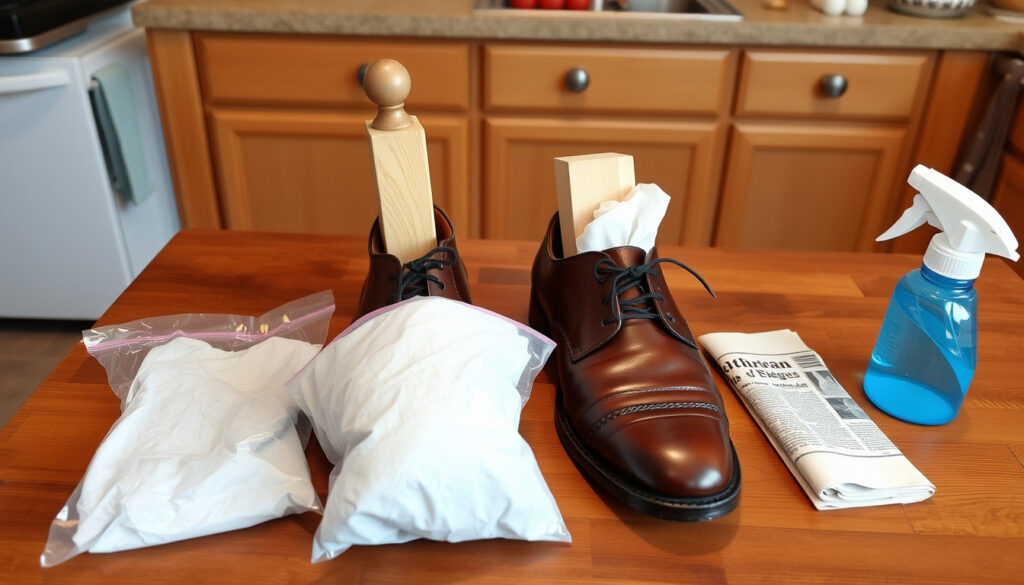
- Fill a zip-lock bag about one-third with water
- Double-bag to prevent leaks
- Mold the bag to the tightest area—usually the toe box or bunion zone
- Place in the shoe and freeze for at least 8 hours
Water expands roughly 9% when it freezes, pushing the shoe walls outward in a way that feels almost invisible. Teri Edmonds calls this the simplest home method, though it works best on non-leather shoes.
Wet newspaper stuffing
- Crumple newspaper into tight balls
- Wet the balls slightly—just damp, not dripping
- Stuff the shoe as full as possible
- Leave overnight; the paper expands as it dries, pressing against the interior
The newspaper approach is old but reliable for canvas and fabric, per Healthline. The stretch is modest—more suited to breaking in new shoes than rescuing tight ones.
Overnight stretcher use
Insert a two-way stretcher before bed, spray with stretching solution, and leave it in overnight. Check and re-adjust the handle every 8 hours if you wake up; the Healthline recommends turning stretchers every 8–12 hours for even expansion. Adjustable shoe trees work similarly and cost under $25 per pair.
“The water will expand as it freezes which will stretch the shoe. This method is simple and will create a gentle stretch.”
— Teri Edmonds, Shoe Expert
Can I stretch my shoes a size bigger?
Expecting a full size increase from home methods is unrealistic. Most people achieve half to three-quarters of a size with consistent effort—enough to turn painful into comfortable.
Limits for leather vs other materials
- Leather stretches best but has a ceiling; excessive force can cause permanent thinning
- Canvas and synthetic fabrics stretch more readily but may not hold their new shape
- Rubber soles don’t stretch much at all
Gentleman’s Gazette notes that leather isn’t designed for large amounts of moisture or alcohol—these strip natural oils and can damage the dye. Stick to conditioner, thick socks, and stretchers for leather shoes.
Home vs cobbler results
Home methods max out around half a size for most materials. Professional cobblers use motorized stretchers that can expand a shoe by a full size or more with even, controlled pressure across the entire footbed. Their typical turnaround is 1–2 days, per FootFitter.
Combining methods for half-size gain
- Start with the freezer method to expand the overall shape
- Follow with targeted heat treatment on specific tight spots
- Finish with a stretcher and spray for precision adjustments
Layering approaches works better than any single method alone. YouLookFab recommends combining the wet-feet walk (1–2 hours of walking with damp feet) with an overnight stretcher for the most stubborn cases.
Leather shoes are not designed to be subjected to large amounts of moisture, let alone potentially stripping the natural properties and colored dye with alcohol solutions, Gentleman’s Gazette warns. If you’re working with expensive leather, test any method on a small, hidden area first.
What household items stretch shoes?
You don’t need special equipment for most stretching jobs. A few things from around the house can handle light to moderate tightness.
Water and newspaper
Wet newspaper is one of the oldest DIY methods—crumple enough to fill the shoe completely, then let it dry overnight. As the paper loses moisture, it contracts and pushes against the interior walls. Healthline rates it as modest in effectiveness but useful for initial break-in.
Rubbing alcohol spray
A 50/50 mix of rubbing alcohol and water softens most shoe coatings temporarily. Spray, put on thick socks, and walk for at least 30 minutes. The effect fades once the alcohol evaporates, but the physical stretch remains.
Thick socks method
- Layer two to three pairs of thick socks
- Put on the shoes and walk around for 30 minutes minimum
- Repeat daily until the fit loosens
This purely mechanical approach works slowly but safely. FootFitter suggests wearing shoes indoors on carpet to soften new leather before attempting any other method.
Thick-sock walking works for gradual break-in, but it won’t rescue shoes you’ve already worn twice and noticed pinching. At that point, the material has already compressed in a specific shape, and you’re better off moving to a spray or stretcher.
What do cobblers use to stretch shoes?
Professional shoe repair shops have tools that apply controlled, even pressure across the entire shoe—something home methods struggle to replicate.
Shoe stretcher tools
Cobblers typically use two-way stretchers made from wood or metal with adjustable Posts. FootFitter notes that these stretchers apply force across the whole shoe rather than targeting one spot, reducing the risk of uneven expansion or damage.
Stretching solutions
Professional-grade sprays penetrate deeper than consumer products and work on leather, fabric, and vinyl. The spray is applied before the stretcher goes in, allowing the material to soften from the inside out. FootFitter says stretch spray penetrates all materials including leather, unlike home remedies that may skip certain types.
Targeted area expansion
For localized problems—like a bunion bump or hammertoe pressure—cobblers use plug attachments that concentrate force on exactly where it’s needed. Shoe Repair Channel on YouTube demonstrates a broom handle technique: inserting the handle into the tight area and working it around to push out seams and relieve pressure points.
“This is a trick of the trade… we’ve used it for years for people that maybe have bunions, corns, calluses—whatever bunion, you can make the edge of the shoe bigger.”
— Cobbler, Shoe Repair Channel
Key Facts
Five primary methods, each with distinct trade-offs in speed, cost, and material compatibility.
| Method | Time | Best for | Cost |
|---|---|---|---|
| Freezer bag + water | Overnight | Canvas, fabric, non-leather | Free |
| Alcohol spray + thick socks | 20–30 minutes | Leather, synthetic | Free |
| Blow dryer + socks | 20–30 minutes | Synthetics, canvas | Free |
| Shoe stretcher + spray | 8–48 hours | All materials | $15–$25 |
| Professional cobbler | 1–2 days | Stubborn cases | $15–$30 |
Free methods work when you have time to wait; paid tools deliver faster results for shoes that need real intervention.
Summary
The fastest path to relief depends on what you have on hand and how much time you can invest. Spray-and-wear with rubbing alcohol takes under an hour but works best on leather. The freezer bag method requires an overnight wait but handles canvas and fabric with no special equipment. For the most stubborn cases—genuine leather that resists stretching, or shoes with a very specific pressure point—a two-way stretcher with spray is worth the $15–25 investment. If nothing else works, a cobbler can expand shoes by a full size using professional machines in 1–2 days, which may be worth it for a favorite pair you’d otherwise retire.
For how to lose weight fast safely, the connection isn’t obvious, but both topics share a practical focus: small, consistent actions compound into real results. If you’re already working on other aspects of your routine, stretching your most comfortable shoes into service may be worth the effort before buying another pair. And if you’re curious about optimizing your living space for comfort, check out our guide on how to measure room for furniture—the same attention to fit that applies to shoes applies to your home.
Frequently asked questions
How much can shoes stretch at home?
Most home methods add half to three-quarters of a size with repeated effort. A full size increase typically requires professional equipment that home tools can’t replicate.
Is shoe stretching safe for all materials?
Not entirely. Leather shouldn’t be frozen or doused in alcohol—both can strip natural oils and damage the finish. Synthetics tolerate heat better but melt if overheated. Always test on a hidden area first.
What if stretching doesn’t work?
If home methods plateau, a cobbler can achieve more significant expansion with motorized stretchers. In rare cases, shoes simply don’t fit your foot shape and returning or replacing them is the better option.
How often should I repeat stretching?
Repeat daily until the fit is comfortable. Stubborn shoes may need a week of consistent effort. After that, occasional maintenance with a stretcher or spray keeps them from tightening again.
What’s the best stretching solution to buy?
Look for products specifically formulated for shoes—they’re available at most shoe stores and online retailers. Professional-grade sprays are more concentrated than consumer options but cost more.
Does heat help stretch shoes?
Yes, but carefully. Heat softens most materials, making them more pliable. Use a blow dryer on medium heat for 20–30 seconds at a time, then flex your foot while the shoe cools. Never apply direct flame or high heat.
Can stretching damage shoes?
Yes, if overdone. Over-stretching thins and weakens material; heat can crack leather; moisture can strip dye. Start with the gentlest method and work up to more aggressive techniques only if needed.
More related posts
 Club Brugge vs Aston Villa Lineups: Starting XI & Match Result
 How Old Is Trump Wife – Age, Background and Facts
 Have I Been Pwned? Is It Safe? Trust & Privacy Explained
 The Flash (2023) Cast: Full List of Actors and Roles
 The Traitors US Season 4: How to Watch, Winner, Cast & Stream
 When Do the Clocks Go Back in 2026? Ireland & UK Dates
 Who Was Driving the Car in the Louth Crash
 Galway to Dublin Airport Bus: Direct Routes, Prices & Guide