When Do the Clocks Go Back in 2026? Ireland & UK Dates
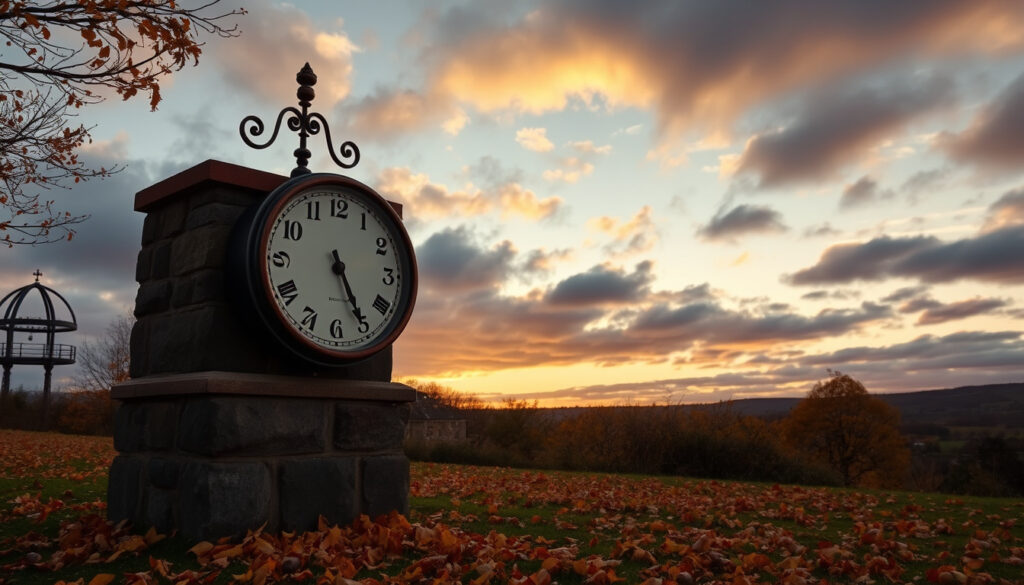
There’s a moment every autumn when the clock on your microwave suddenly looks wrong, and you remember: ah yes, the change is upon us. For anyone in Ireland wondering exactly when that moment hits in 2026 — the official date is Sunday 25 October at 2am, when clocks turn back to 1am, giving you an extra hour in bed.
When clocks go back in Ireland 2026: 25 October at 2am ·
Time change direction in October: Gain one hour (clocks go back) ·
Time change direction in March: Lose one hour (clocks go forward) ·
Same in UK? Yes, same date and time
Quick snapshot
- Clocks go back one hour (Irish Examiner)
- You gain one hour of sleep (The Irish Times)
- Sunrise and sunset occur one hour earlier (Irish Examiner)
- Spring forward, fall back
- Clocks go forward in March
- Clocks go back in October
Four key figures sum up the Irish clock change, all sourced from official government guidance. The pattern is consistent: the last Sunday of October is your date, 2am is your moment, and you gain an hour.
| Fact | Value |
|---|---|
| Next clock change in Ireland | 25 October 2026 at 2am (RTÉ) |
| Direction | Back (gain one hour) (Irish Examiner) |
| Official body | Irish Government (Citizens Information) |
| Same in UK? | Yes, same date and time (GOV.UK) |
For anyone in Ireland planning a late Saturday night on 24 October 2026, the 2am rule means your phone and smartwatch will switch automatically — but your analogue alarm clock won’t. Set it back an hour before bed, or enjoy the lie-in.
When do the clocks go back in Ireland in 2026?
Exact date and time for Ireland
- Clocks go back at 2am on the last Sunday of October (RTÉ). In 2026 that is Sunday 25 October.
- At precisely 2am, the time becomes 1am. You gain one full hour of clock time.
Exact date and time for the UK
- The UK switches at the same moment — last Sunday of October at 2am (GOV.UK).
- Ireland and the UK have shared the same clock times since 1916 (RTÉ News).
The implication: no matter which side of the border you are on, the change happens together. If you live in Dublin or Derry, your 2am is the same shift.
Do we gain or lose an hour when the clocks go back?
Why you get an extra hour in bed
- In autumn, clocks go back from 2am to 1am — that repeats the hour between 1am and 2am, giving you an extra 60 minutes (The Irish Times).
- In spring (March), clocks go forward at 1am to 2am, losing an hour.
Effect on sunrise and sunset times
- After the October change, sunrise and sunset occur one hour earlier each day, leading to darker evenings but lighter mornings.
The consequence: each October, Ireland shifts from Irish Standard Time back to GMT, and the extra hour is yours to keep.
Why do the clocks go back at 2am?
Historical reasons for 2am change
- Daylight Saving Time was first introduced during World War I to save fuel (Wikipedia).
- The 2am time was chosen because it is late enough that most Saturday evening events are over, and early enough that Sunday morning church services are not disrupted (Wikipedia).
Minimising disruption
- Changing at 2am minimises impact on train schedules, night-time workers, and digital systems that sync automatically.
While the 2am rule is designed to minimise disruption, it can catch out anyone who assumes the change happens at midnight or 1am. The shift is not at the start of the day — it’s two hours in.
The pattern: the 2am standard has remained largely unchanged since its adoption over a century ago, precisely because it balances disruption across weekend activities and morning routines.
Do clocks go back at 12 or 1?
Clarifying common confusion about changeover time
- The change occurs at 2am, not 12am or 1am (RTÉ).
- At 2am, clocks are set back to 1am. So if you are awake at 1:59am on 25 October, you will see 2:00am, then the clock jumps to 1:00am.
What to do with your clocks at 1:59am
- If you have an analogue clock or an older digital alarm, turn the hands back one hour before bed, or simply enjoy the extra hour if you stay up.
- Smartphones, computers and smart speakers connected to the internet update automatically (timezoneconverter.com).
The takeaway: if you remember “2am back to 1am”, you will never be tricked by your microwave clock again.
What is the history of changing the clocks?
Daylight Saving Time origins
- DST was first widely adopted during World War I, when countries introduced it to conserve coal and fuel (Wikipedia).
- Ireland and the UK have followed the system since 1916.
Ireland’s adoption of DST
- Ireland follows the European Union’s coordinated seasonal clock-change schedule (Wikipedia).
- Ireland’s winter clock is GMT, while summer time is Irish Standard Time (IST).
- The European Parliament voted in 2019 to end seasonal clock changes, but no implementing steps followed (The Irish Times).
The upshot: the twice-yearly shift remains entrenched, and the 2026 change is business as usual — unless the EU eventually hits the stop button.
Do the clocks go back tonight in Ireland?
How to check if tonight is the change night
- If today is the last Saturday of October, then yes, clocks go back tonight (the early morning of Sunday). In 2026, last Saturday is 24 October, so the change happens in the early hours of 25 October.
- If today is any other day, the change is not tonight.
What happens if you miss the change
- Your mobile phone, tablet, and smartwatch will update automatically. Manual clocks will be an hour ahead until you adjust them.
- You might arrive an hour early to appointments — which is far better than being an hour late.
Why this matters: checking this page on the right day saves you from that slightly confused Sunday morning feeling.
The Irish government has expressed concern that ending seasonal clock changes could create two time zones on the island of Ireland (Chronicle Gibraltar). That risk alone may keep the change alive for years to come.
Timeline signal
- Last Sunday of March 2026 — Clocks go forward one hour (lose one hour) (RTÉ)
- Last Sunday of October 2026 — Clocks go back one hour (gain one hour) — 25 October
- World War I — Daylight Saving Time first introduced (Wikipedia)
- Present — Ireland and UK continue DST under EU and UK law
Confirmed facts vs what’s unclear
Confirmed facts
- Clocks go back on last Sunday of October at 2am (RTÉ)
- In 2026 that date is 25 October
- Changes occur in both Ireland and UK on same day (GOV.UK)
What’s unclear
- Future of DST in the EU after proposed abolition (not yet implemented) (The Irish Times)
What the official sources say
“The clocks go back by one hour at 2am on the last Sunday of October.”
— RTÉ (Ireland’s national public-service media)
“The dates when the clocks go back in the UK are the same as Ireland — the last Sunday of March and the last Sunday of October.”
— GOV.UK (UK government official guidance)
The consequence for anyone in Ireland is straightforward: set a reminder for the last Saturday of October 2026, wind your analogue clocks back before bed, and let the digital world handle the rest. For the Irish government and the EU, the long-term question of whether to abolish the switch remains unresolved — but for 2026, the pattern is set in stone.
Related reading: What Date Is Mother’s Day 2026? · How Many Seconds Are in a Day? 86,400 Seconds Explained
jump2eu.com, daylight-savings.com, instagram.com, holidays-info.com, youtube.com
The annual clock change can be confusing, but Irelands 2026 clock change dates provide clarity for October 25.
Frequently asked questions
When do the clocks go back in Ireland in 2026?
At 2am on Sunday 25 October 2026 (last Sunday of October).
Do I gain or lose an hour of sleep in October?
You gain one hour. The clocks go from 2am to 1am, so you get an extra hour in bed.
Why do clocks change at 2am instead of midnight?
2am is chosen to minimise disruption to Saturday evening events and Sunday morning church services, and it is standard practice in Ireland and the UK.
Do all countries change their clocks?
No. Around 70 countries observe DST. Many near the equator do not change. The EU and UK both change, but many other regions, including most of Asia and Africa, do not.
Is daylight saving time permanent anywhere?
Yes. Some US states and Canadian provinces have considered permanent DST, but none have implemented it yet. The EU voted to end seasonal changes in 2019, but no law has passed.
Does my phone change automatically?
Yes, if it is connected to the internet and set to automatic time zone updates. Most smartphones, tablets and smart speakers handle the change without user input.
What should I do to prepare for the clock change?
On Saturday 24 October 2026, set any manual clocks back one hour before bed, or wait until the morning. Check that your phone is set to automatic time. Enjoy your extra hour.
More related posts
 Knock Knock Jokes for Kids, Adults & Language Learners
 Strep Throat Symptoms: 5 Key Signs and How to Tell It from a Virus
 Where to Watch I’m a Celebrity: UK & Ireland Guide 2025
 Love Island 2025 Cast – Full List Ages Jobs Updates
 Killarney Golf & Fi hing Club: Location, Co t & Vi itor Info
 Katie McCabe and Caitlin Foord: Couple, Transfer, Red Card
 Dublin Airport Holiday Warning – Protests Disrupt Access Roads
 Finley Aaron Love Lockwood: Biography, Age & Custody