Pulpo a la Gallega Recipe – How to Cook Galician Octopus
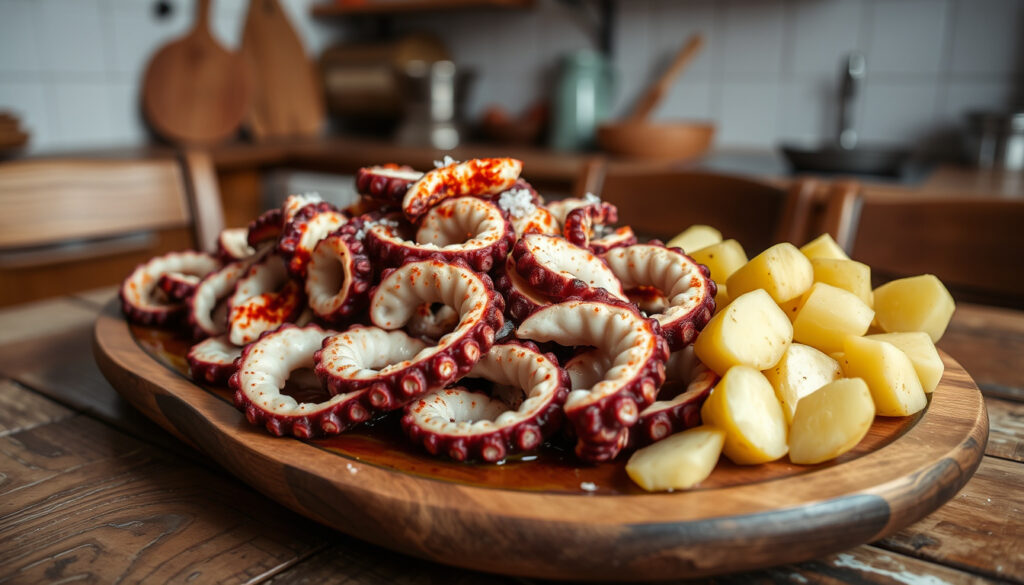
The mere mention of pulpo a la gallega makes Spaniards smile and visitors lean in. This Galician octopus dish, served on a wooden plate with potatoes and a dusting of smoked paprika, has been turning skeptics into believers for centuries.
Dish origin: Galicia, Spain ·
Main ingredients: Octopus, potatoes, paprika, olive oil ·
Cooking time: 50–60 minutes ·
Serving temperature: Warm or room temperature ·
Preparation method: Boiling after freezing
Quick snapshot
- Traditional Galician dish, also called Polbo á feira (Basco Fine Foods)
- Key ingredients: octopus, potatoes, sweet paprika, olive oil (Spain Food Sherpas)
- Freezing octopus before cooking is a common tenderizing technique (Basco Fine Foods)
- Exact historical origin date remains unconfirmed
- Whether cooking with a cork in the water actually affects tenderness
- Optimal boiling time depends on octopus size and freshness
- Medieval period: octopus sold at Galician fairs (feiras)
- 19th century: dish gets the name Pulpo a la Gallega
- Present day: iconic Spanish tapa recognized worldwide
- Growing interest in authentic regional preparations
- More home cooks adopting the freeze-then-boil method
- Increased availability of smoked paprika (pimentón de la Vera) in global markets
Six key facts shape the foundation of this dish—from its origin to its serving style.
| Attribute | Value |
|---|---|
| Dish Name | Pulpo a la Gallega (Polbo á feira) |
| Region | Galicia, Spain |
| Main Ingredient | Octopus |
| Cooking Method | Boiling |
| Common Seasonings | Smoked paprika, olive oil, salt |
| Serving Style | Sliced rounds over potatoes |
What is Pulpo a la Gallega?
What does ‘la gallega’ mean?
Pulpo a la Gallega translates to “Galician-style octopus.” The phrase la gallega refers to the region of Galicia in northwestern Spain, where this dish (Basco Fine Foods) is both a staple of local fairs and a source of regional pride. It is also known as Polbo á feira, meaning “fair-style octopus,” a nod to its centuries-old tradition at Galician market gatherings.
On the plate, expect boiled octopus sliced into rounds, resting on a bed of boiled potatoes, then drizzled with extra virgin olive oil and generously sprinkled with sweet or smoked paprika and coarse salt. The presentation is simple, but the effect is anything but.
The pattern: This dish is a masterclass in minimalism—just four main components, each chosen to let the octopus’s texture and the smokiness of the paprika shine.
The simplicity of Pulpo a la Gallega means that every ingredient quality matters. A subpar octopus or a dull paprika will be immediately exposed.
Essential Ingredients for Pulpo a la Gallega
What part of the octopus do you not eat?
The octopus must be cleaned before cooking. The beak (a hard, parrot-like structure at the center of the tentacles), the eyes, and the internal organs are typically removed. Some cooks also discard the head, though it can be used for stock (Basco Fine Foods).
- Octopus – fresh or frozen (frozen is often preferred for tenderness)
- Potatoes – waxy varieties hold their shape when boiled
- Sweet paprika – pimentón de la Vera for authentic smoky flavor (Spain Food Sherpas)
- Extra virgin olive oil – high quality, fruity
- Coarse sea salt – flaky salt like Maldon works well
The catch: Many home cooks skip the step of tenderizing fresh octopus, which leads to tough, rubbery results. Freezing is the most reliable insurance policy.
If you’re using fresh octopus, freeze it for at least 24 hours before cooking. The ice crystals that form during freezing break down muscle fibers, making the meat inherently more tender from the start.
How to Cook Spanish Octopus for Pulpo a la Gallega
Do you need to boil octopus before frying?
Traditional Pulpo a la Gallega is boiled, not fried. The boiling method is the only one used in authentic Galician preparations. However, some modern variations sear the boiled octopus briefly for extra color—but this is not traditional. The classic recipe calls for simmering the octopus in water until fork-tender, then slicing and serving without any frying step (Basco Fine Foods).
How do you cook octopus so it’s not chewy?
The secret to tender octopus lies in two techniques: the “scare” (asustar) and proper simmering time.
- Freeze the octopus overnight if using fresh. This step is vital for breaking down connective tissue.
- Scare the octopus: Bring a large pot of water to a boil. Using tongs, dip the octopus head into the boiling water three times, each for about 5 seconds. This tightens the skin and curls the tentacle tips, preventing the skin from peeling off during cooking (Spain Food Sherpas).
- Simmer: Place the entire octopus in the pot and reduce heat to a gentle simmer. Cook for 12 minutes per 1kg of octopus (about 20–25 minutes for a 2kg octopus) (Basco Fine Foods).
- Check doneness: Pierce the thickest part of a tentacle with a wooden skewer. It should slide in easily (Basco Fine Foods).
- Slice and plate: Cut the tentacles into 1 cm (½ inch) rounds (Chef’s Pencil). Arrange over boiled potatoes, drizzle olive oil, and sprinkle paprika and salt.
The trade-off: The 12-minutes-per-kilo guideline works for most octopus, but larger specimens (over 3kg) may need up to 30 minutes per kilo. Always trust the skewer test over the clock.
Is Pulpo a la Gallega Healthy?
Octopus is a lean protein source with notable nutritional benefits. A 100-gram serving of octopus provides about 164 calories, 30 grams of protein, and only 2 grams of fat. It is also rich in vitamin B12, selenium, and iron (USDA FoodData Central). However, boiled octopus contains moderate dietary cholesterol (around 48 mg per 100g), which is comparable to shrimp but lower than eggs. When prepared with olive oil and only a sprinkle of salt, Pulpo a la Gallega is a heart-healthy choice by Mediterranean diet standards.
One caveat: If you’re watching sodium, note that the dish relies on coarse salt for seasoning. You can control the amount, but it is a key flavor component. Potatoes add complex carbohydrates and fiber, making the dish satiating even in small portions.
What this means: For anyone following a high-protein or gluten-free diet, this dish is a strong contender. It is naturally gluten-free (Basco Fine Foods) and can fit into low-fat, keto, or Mediterranean meal plans with minor adjustments.
What are some common mistakes when cooking octopuses?
- Skipping the freeze: Fresh octopus cooked immediately can be tough and chewy. Freezing overnight is the most reliable tenderizer.
- Overcooking or undercooking: Too long and the octopus turns rubbery; too short and it remains chewy. The skewer test is non-negotiable.
- Not removing the beak and eyes: These parts are inedible and must be cut out before cooking (Basco Fine Foods).
- Skipping the “scare”: Without it, the skin may slip off during simmering, and the tentacle tips lose their characteristic curl.
- Over-salting: Paprika and olive oil carry a lot of flavor; go easy on the salt until you taste.
- Using the wrong paprika: Sweet or smoked Spanish paprika is essential. Regular chili powder or Hungarian paprika will change the character of the dish.
Why this matters: Each mistake directly affects either texture or authenticity. The line between passable and exceptional Pulpo a la Gallega is thin—and entirely avoidable with these simple adjustments.
Upsides
- Low in fat, high in protein and essential nutrients
- Naturally gluten-free and fits many dietary patterns
- Simple ingredients, minimal equipment needed
- Impressive yet approachable for home cooks
- Can be made ahead and served at room temperature
Downsides
- Requires advance planning (freezing overnight)
- Octopus can be expensive and hard to find in some regions
- Timing is critical; easy to overcook
- Moderate cholesterol content may be a concern for some
- Smoked paprika (pimentón de la Vera) is not always stocked locally
Step-by-Step Guide to Authentic Pulpo a la Gallega
- Prepare the octopus: If using fresh octopus, freeze it for at least 12 hours. Thaw in the refrigerator overnight before cooking. Clean by removing the beak, eyes, and innards.
- Boil the potatoes: In a separate pot, boil waxy potatoes in salted water until fork-tender (about 25 minutes) (Brindisa Spanish Foods). Drain and slice into thick rounds.
- Scare the octopus: Bring a large pot of water (traditional cooks use a copper cauldron) to a rolling boil. Dip the octopus head in three times, 5 seconds each. This tightens the skin and curls the tips.
- Simmer: Submerge the octopus completely, reduce heat to a steady simmer. Cook 12 minutes per 1kg of octopus (e.g., 24 minutes for a 2kg octopus). Do not cover.
- Check doneness: Insert a wooden skewer into the thickest tentacle. It should go in with little resistance. If not, simmer another 3–5 minutes and test again.
- Rest and slice: Remove octopus and let it rest for 2 minutes. Using kitchen shears or a sharp knife, slice tentacles into 1 cm rounds. Arrange on a wooden plate or serving platter.
- Assemble: Lay sliced potatoes as a base, top with octopus rounds. Drizzle generously with extra virgin olive oil. Sprinkle sweet or smoked paprika (pimentón de la Vera) across the dish. Finish with coarse sea salt flakes.
- Serve: Pulpo a la Gallega is best enjoyed warm or at room temperature. Pair with crusty bread and a light Albariño wine.
The implication: This step sequence is not negotiable. Each phase—freeze, scare, simmer, rest—builds on the previous one. Skipping any step compromises texture and authenticity.
What We Know and What Remains Unclear
Confirmed facts
- Pulpo a la Gallega originates from Galicia, Spain (Basco Fine Foods)
- Main ingredients include octopus, potatoes, paprika, olive oil (Spain Food Sherpas)
- Freezing octopus before cooking is a proven tenderizing technique (Basco Fine Foods)
- The dish is traditionally served with paprika and olive oil on a wooden plate
- Pimentón de la Vera (smoked paprika) is the authentic choice (Spain Food Sherpas)
What remains unconfirmed or disputed
- The exact century the dish was first served at Galician fairs is unclear
- Whether adding a cork to the boiling water truly aids tenderness is not scientifically verified
- The “ideal” simmering time varies widely depending on octopus size, age, and freezing history
- Some modern recipes call for a quick pan-sear after boiling, but traditionalists reject this
- The use of copper pots may affect flavor, but no controlled studies exist on this
The secret to perfect pulpo is the ‘scare’—dipping it three times into boiling water. It makes the skin stay on and the tips curl beautifully. That’s how you know it’s done right.
— Chef Juan Mari Arzak, as cited by Spain Food Sherpas
Galician octopus is not complicated; it’s honest cooking. The ingredients speak for themselves. The only trick is not to overcook it.
— Spanish food writer Ana Vega, referencing Galician cooking traditions (Basco Fine Foods)
If you buy fresh octopus, freeze it for at least one night. That one step makes the difference between tough rubber and melt-in-your-mouth tenderness.
— Chef Alberto Herraiz, quoted in Chef’s Pencil
For the home cook in search of an impressive yet simple Spanish tapa, Pulpo a la Gallega offers a clear path: start with frozen octopus, respect the “scare,” and trust the skewer. The consequence of ignoring these steps is a rubbery disappointment. But when done right, this Galician classic delivers a tenderness and smoky depth that justifies its legendary status in Iberian cuisine.
Related reading: **Genuine Galician-style octopus recipe** · **Pulpo a la Gallega recipe and guide**
Frequently asked questions
Can I use frozen octopus for Pulpo a la Gallega?
Yes, frozen octopus is actually preferred by many cooks because the freezing process tenderizes the meat. Just thaw it completely in the refrigerator before cooking.
What wine goes well with this dish?
A crisp white Albariño from Galicia is the classic pairing. A dry Godello or even a light red like Mencía also works.
Can I make Pulpo a la Gallega without potatoes?
Potatoes are a traditional base, but you can substitute boiled chickpeas or grilled vegetables for a different texture. The star remains the octopus.
How many calories are in a serving of Pulpo a la Gallega?
A typical 200g serving (about 150g octopus + 100g potatoes + olive oil) contains roughly 350–400 calories. Octopus itself is low in calories, but the olive oil adds 120–150 calories per tablespoon.
Is Pulpo a la Gallega spicy?
No, it is not spicy. Smoked paprika provides a mild, earthy heat, not the burn of chili. If you want heat, you can add a pinch of cayenne or serve with pimentón picante (hot paprika).
Can I prepare this dish in advance?
You can cook the octopus and potatoes a day ahead. Slice and assemble just before serving. Reheat the sliced octopus gently in its own broth or a bit of water.
What is the difference between Pulpo a la Gallega and other octopus dishes?
Pulpo a la Gallega is always boiled and served with potatoes, paprika, and olive oil. Other octopus dishes may feature grilled, braised, or stewed octopus with different sauces (e.g., Spanish pulpo a la plancha is grilled, not boiled).
Is Pulpo a la Gallega keto-friendly?
Yes, if you omit the potatoes. Octopus is low in carbohydrates and high in protein. The olive oil adds healthy fats, making it suitable for ketogenic diets.
More related posts
 Volcanoes in Iceland Near Reykjavik – 5 Closest Sites, Maps & Tours
 Who Shot Charlie Kirk? Verified Facts & Latest Case Update
 Connacht vs Munster Tickets 2026: Prices, TV Coverage
 What Day Is Easter 2025? Sunday, April 20 – Why So Late
 Free Online Drawing Courses: Best for Beginners
 2025 Irish Presidential Election Candidates and Results
 Garmin Forerunner 165 Music: Worth the Extra Cost
 Come organizzare il tempo: 1-3-5, ALPEN & Rule of 3