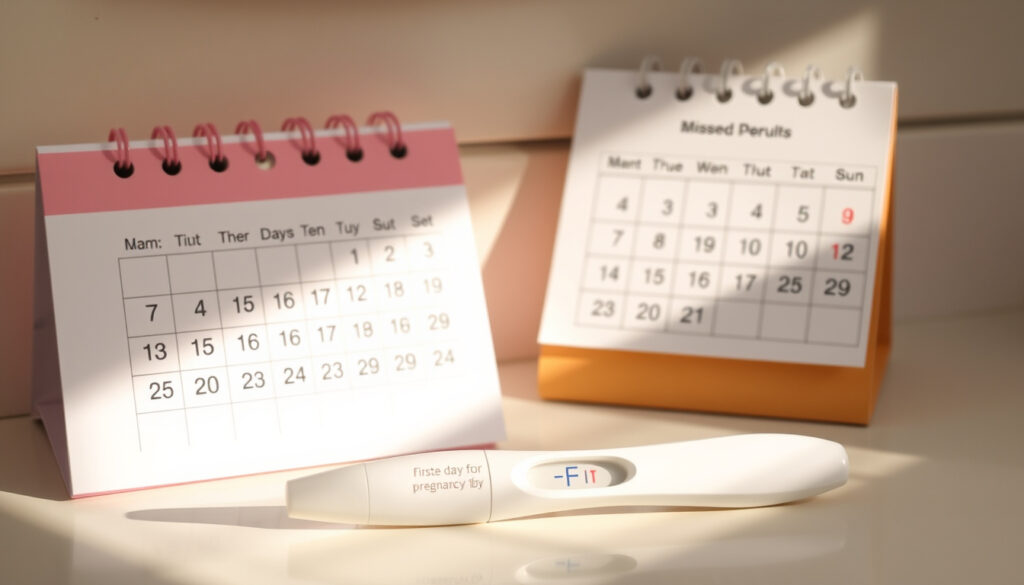
When to Take a Pregnancy Test: Timing for Best Results
Home pregnancy tests deliver their most accurate results on the first day of a missed period, with some sensitive brands detecting pregnancy up to 6 days earlier. Testing too early remains the leading cause of false negatives, accounting for 10–20% of incorrect results even after a missed period.
Key stats: Earliest detection: 4–6 days before missed period | Standard test time: First day of missed period | Sensitive tests: 8–10 days post-conception | False negative risk: Highest when testing prematurely
Standard Cycle
- Test day 1 of missed period
- 99% accuracy Roswell ObGyn
- NHS recommended
Early Testing
- 4–6 days before period
- Sensitive tests only Clearblue
- Higher false negative risk
After Ovulation
- 10–14 days post-ovulation
- Urine hCG detectable Healthline
- Clearblue and First Response brands
Key Timing Rules
- 14 days minimum after unprotected sex Fox Valley ObGyn
- First morning urine for best results Clue
- Retest 1 week later if negative
How early in pregnancy will it show up on a test?
Days before missed period
Modern home pregnancy tests vary significantly in sensitivity. Clearblue Early Detection can identify pregnancy as early as 6 days before a missed period, while standard tests require waiting until the first day of the missed period to reach approximately 99% accuracy. At 6 days before a missed period, accuracy drops to around 56%, meaning nearly half of pregnant individuals would receive a false negative Roswell ObGyn.
Post-conception detection
The hormone hCG (human chorionic gonadotropin) becomes detectable in the bloodstream approximately 10 days after conception, according to the Cleveland Clinic. In a standard 28-day cycle, where ovulation occurs on day 14, hCG levels reach detectable thresholds around 12–15 days after ovulation Clearblue. Traces of hCG appear as early as 6 days after ovulation, becoming reliable 7–10 days after Healthline.
“Home pregnancy tests are around 99% accurate when taken after a missed period and when used correctly.”
— First Response, Test Manufacturer
Tip: If you test early and receive a negative result, retest after your missed period. The Mayo Clinic recommends retesting one week later if your period still hasn’t arrived.
How many weeks pregnant will a pregnancy test be positive?
Week 3–4 detection
Pregnancy is typically detectable from week 4 onward using standard home tests. Pregnancy weeks are calculated from the first day of the last menstrual period (LMP), meaning a 28-day cycle with ovulation on day 14 places conception around the start of week 3. By week 4—when the period is missed—most tests will register positive if hCG levels have risen sufficiently Ohio State Health.
hCG levels rise
hCG doubles approximately every 48–72 hours during early pregnancy. This rapid rise means that a test taken on the first day of a missed period may show a faint positive, while a test taken 2–3 days later will typically display a much darker line. The Clearblue guidance indicates that home tests are over 99% accurate from the day of the expected period when used according to instructions.
“If you wait one week after a missed period, the chance of a false negative is very low.”
— Ohio State Health Expert, OB-GYN
Warning: Testing too early is the most common cause of false negatives Roswell ObGyn. Diluted urine from excessive fluid intake can also cause false negatives by diluting hCG concentration below the test’s detection threshold Clue.
Can I be 2 weeks pregnant and test negative?
Reasons for negative results
Yes, testing negative while pregnant is possible, particularly in early pregnancy. Approximately 10–20% of pregnant individuals receive false negatives on the first day of a missed period Clue. This occurs because hCG levels vary significantly between individuals, and implantation may happen later in some cycles. The detection threshold for most home tests is 20–50 mIU/mL Apollo Cradle, which may not be reached until several days after a missed period.
Retest timing
If you receive a negative result but still suspect pregnancy, wait several days and test again. The Mayo Clinic advises retesting one week after a negative result if your period hasn’t started. Blood tests ordered by a healthcare provider can detect lower hCG levels and provide confirmation when home urine tests remain negative Roswell ObGyn.
Note: For irregular cycles, the Ohio State Health recommends testing 21 days after intercourse as a safer alternative to counting from a missed period.
Is 7 days too early to do a pregnancy test?
Implantation window
Implantation typically occurs 6–12 days after ovulation, with most implantations happening around days 8–10. Testing 7 days before a missed period places you approximately 7 days past ovulation—within the implantation window but potentially before hCG has accumulated to detectable levels. At this point, even sensitive early-detection tests may not register pregnancy, as accuracy at 6 days before a missed period is only 56% Roswell ObGyn.
Test sensitivity
The First Response claims detection 6 days sooner than a missed period, while Clearblue states their Early Detection test works 6 days before a missed period. However, waiting until 10–14 days post-ovulation significantly improves reliability Fox Valley ObGyn. Experts recommend waiting at least 14 days after unprotected sex for reliable results Fox Valley ObGyn.
“Testing at the wrong time is the most common reason for inaccurate results.”
— Roswell ObGyn, OBGYN Clinic
TL;DR: Wait at least one week after a missed period to minimize false negatives. If you test earlier with a sensitive brand and get a negative, retest after your period is due.
Is 2 weeks pregnant actually 4 weeks?
LMP calculation
Pregnancy dating begins from the first day of the last menstrual period (LMP), not from conception. This means that when pregnancy tests become accurate around week 4 (first day of missed period), the embryo is technically only about 2 weeks old. The Cleveland Clinic confirms that hCG is detectable 10 days after conception, which aligns with the second week of gestational age.
Cycle impact
For a 28-day cycle, ovulation occurs around day 14, and conception follows shortly after. By day 28 (expected period), the gestational age is 4 weeks, but the embryo has existed for only approximately 2 weeks. This discrepancy between gestational age and embryonic age is why Clue emphasizes cycle tracking to determine missed period timing accurately. In a 28-day cycle, day 28 is the first day of the expected period, while day 29 is the first day of a missed period Flourish Care.
Tip: Use first morning urine for the most concentrated hCG levels, especially when testing before a missed period Clue. After the missed period, tests are generally accurate at any time of day if hCG levels are high enough Clearblue.
When to take a pregnancy test for accurate results
The most reliable testing window depends on your cycle length and when you suspect conception occurred. For a standard 28-day cycle, testing on day 29 (first day of missed period) provides approximately 99% accuracy Roswell ObGyn. Sensitive early-detection tests can be used 4–6 days before your expected period, though false negative rates are significantly higher at these earlier windows.
These accuracy figures apply to 28-day menstrual cycles and represent home pregnancy test performance when used according to manufacturer instructions.
| Timing | Accuracy | Recommendation |
|---|---|---|
| 6 days before missed period | 56% | Only with sensitive early-detection tests |
| First day of missed period | 99% | Standard testing recommended |
| One week after missed period | Very high (minimal false negatives) | Optimal for confirming results |
| 14+ days post-ovulation | 99%+ | Most reliable detection window |
The pattern shows a clear progression: earlier testing carries substantially higher risk of false negatives. The implication is that patience pays—waiting even a few days after a missed period dramatically improves reliability.
Warning: Blood tests are recommended for confirmation after a negative urine test if pregnancy is still suspected Roswell ObGyn. Home tests detect hCG in urine, but blood tests can measure lower hormone levels and provide earlier confirmation.
Summary: Test on the first day of your missed period for 99% accuracy, or up to 6 days earlier with sensitive brands if you cannot wait. Always retest if you receive a negative result but suspect pregnancy.
Related reading: When to Take a Pregnancy Test for Accurate Results · Best Time to Take a Pregnancy Test
Sensitive tests from brands like Clearblue allow detection as early as four to six days before your period, per this detailed timing guide experts endorse.
Frequently Asked Questions
What are 100% signs of pregnancy?
No home pregnancy test claims 100% accuracy. However, a positive test result followed by a healthcare provider confirmation through blood test and ultrasound provides the most definitive pregnancy diagnosis. The only truly definitive signs are those confirmed through medical imaging and laboratory analysis.
What is a 2 finger test in pregnancy?
The “2 finger test” is a medical examination performed by healthcare providers to assess cervical changes during pregnancy. This clinical assessment checks for signs of pregnancy-related cervical softening and position changes. It is not related to home pregnancy testing and should only be conducted by qualified medical professionals.
What is pregnancy mouth?
“Pregnancy mouth” is not a standard medical term. Some individuals report oral changes during pregnancy, such as increased saliva production, gum sensitivity, or metallic taste (dysgeusia). These symptoms are related to hormonal changes and are not diagnostic criteria for pregnancy.
After how many days pregnancy can be confirmed by urine test?
Urine pregnancy tests can confirm pregnancy as early as 10–14 days after conception, which corresponds to approximately the first day of a missed period in a 28-day cycle. Sensitive early-detection tests may provide accurate results 4–6 days before a missed period Clearblue, though false negative rates are higher at these earlier windows.
How soon will a pregnancy test read positive?
Most pregnancy tests will read positive by the first day of a missed period, which is approximately 14 days after ovulation in a 28-day cycle. Sensitive tests may detect pregnancy 4–6 days earlier First Response, while standard tests require waiting until the missed period for optimal accuracy.
Maximum how many days to confirm pregnancy?
Pregnancy can typically be confirmed within 2–3 weeks of conception through home tests, or earlier through blood tests ordered by a healthcare provider. If home tests remain negative but pregnancy is suspected, consult a healthcare provider for blood hCG testing and potential ultrasound confirmation.
28 day cycle when can I test for pregnancy?
For a 28-day cycle, test on day 29 (first day of missed period) for approximately 99% accuracy. Early-detection tests can be used starting around day 23–24, approximately 4–6 days before the expected period. The Roswell ObGyn notes that accuracy improves significantly with each day closer to the missed period.
Sources
- Roswell ObGyn
- Clearblue
- Ohio State Health
- Clue
- Mayo Clinic
- Cleveland Clinic
- First Response
- Healthline
- Fox Valley ObGyn
- Clearblue Early Detection
- Flourish Care
More related posts
 Galway to Dublin Airport Bus: Direct Routes, Prices & Guide
 Kia Optima for Sale: Best Years, Problems & Prices 2025
 Was tun am Wochenende? Weekend Activities in Berlin
 How to Take a Screenshot on Samsung Galaxy (6 Ways)
 Cork to Limerick Bus: Timetables, Prices & Operators 2025
 Multi Car Insurance Ireland: Compare 2026 Providers & Savings
 How to Stretch Shoes at Home: Fast, Effective Methods
 Oldest Pub in Dublin: The Brazen Head vs Sean’s Bar