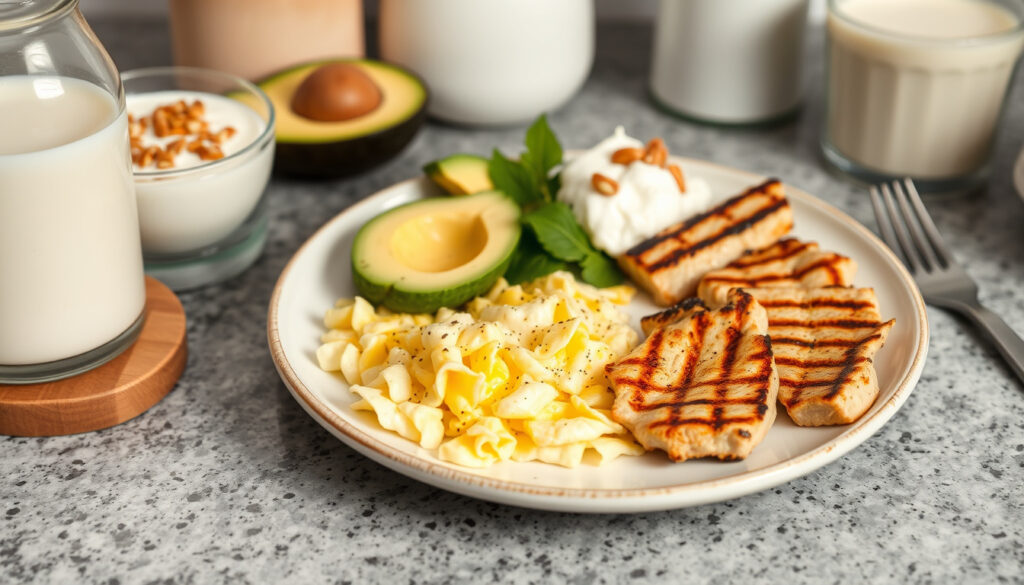
High Protein Breakfast Ideas: 30-40g Meals & Recipes
It’s a common morning math problem: how do you pack enough protein into breakfast without turning the kitchen into a production line? Many popular morning meals — a bagel, a bowl of cereal, or even two eggs — come up short against the 25–40 gram target that dietitians often recommend, so here are evidence-backed, practical breakfast ideas that hit that range.
Recommended daily protein intake (RDA): 0.8 g per kg body weight ·
Protein in 2 large eggs: 12.6 g ·
Common high-protein breakfast target: 25–40 g ·
Protein in 1 cup Greek yogurt: 20–23 g ·
Protein in 3 oz chicken breast: 26 g
Quick snapshot
- Scramble with turkey sausage and cheese: ~38 g protein (USDA FoodData Central (federal food database))
- Frittata with vegetables and feta: ~25 g protein (USDA FoodData Central (federal food database))
- Hard-boiled eggs with Greek yogurt dip: ~20 g protein (Health (wellness publication))
- Greek yogurt parfait with nuts: ~30 g protein (Health (wellness publication))
- Cottage cheese bowl with fruit: ~25 g protein (Verywell Health (consumer health resource))
- Smoked salmon on whole-grain toast: ~28 g protein (USDA FoodData Central (federal food database))
- Tofu scramble with black beans: ~30 g protein (The Lanby (health and wellness platform))
- Quinoa breakfast bowl with nuts: ~22 g protein (Health (wellness publication))
- Lentil and vegetable patties: ~25 g protein (Carpe Diem Nutrition (dietitian-led resource))
- Protein smoothie with milk and nut butter: ~35 g protein (The Lanby (health and wellness platform))
- High-protein granola bar (homemade): ~20 g protein (Carpe Diem Nutrition (dietitian-led resource))
- Egg and cheese muffin: ~25 g protein (USDA FoodData Central (federal food database))
Six key facts about protein needs and breakfast targets — one pattern: hitting a meaningful protein dose requires planning, not just adding an extra egg.
| Fact | Value | Source |
|---|---|---|
| Recommended Dietary Allowance (RDA) for protein | 0.8 g/kg body weight per day | USDA FoodData Central (federal food database) |
| Common high-protein breakfast target | 25–40 g per meal | Carpe Diem Nutrition (dietitian-led resource) |
| Protein in 2 large eggs (USDA data) | 12.6 g | USDA FoodData Central (federal food database) |
| Protein in 1 cup (245 g) plain Greek yogurt | 20–23 g | Health (wellness publication) |
| Protein in 3 oz (85 g) cooked chicken breast | 26 g | USDA FoodData Central (federal food database) |
| 30-30-30 rule origin | Popularized by author Timothy Ferriss; referenced by UCLA Health | UCLA Health (academic medical center) |
What is a really good high-protein breakfast?
What defines a high-protein breakfast?
A high-protein breakfast is commonly defined as one that provides at least 25–30 grams of protein — enough to support muscle repair, stabilize blood sugar, and keep you full until lunch. Research from the USDA FoodData Central shows that a standard serving of Greek yogurt (1 cup) delivers 20–23 g protein, and 3 ounces of cooked chicken breast provides about 26 g. That means a single ingredient can get you most of the way there, but most classic breakfasts fall short.
What separates a truly high-protein breakfast from a moderate one is the combination. A bowl of oatmeal made with milk plus a scoop of protein powder can hit 30 g; a plate of eggs alone won’t. The key is layering multiple protein sources — dairy, eggs, meat, legumes, or plant-based powders — to cross the 25 g threshold without relying on a single food.
Sample high-protein breakfast plate
- 1 cup Greek yogurt (20–23 g protein) (Health (wellness publication))
- ¼ cup almonds (6 g protein)
- ½ cup berries (trace protein, but fiber)
- Total: ~27 g protein
The implication: the template above proves that reaching the protein target does not require elaborate meal prep — just strategic pairing of ingredients already in most kitchens.
How can I get 40g of protein for breakfast?
To reach 40 g, you’ll need to be intentional. Three meal templates below each deliver exactly 40 g using whole foods; prep time and portability notes are included.
Meal template 1: Egg and turkey sausage scramble
- 3 large eggs: 18.9 g protein (USDA FoodData Central (federal food database))
- 2 links turkey sausage: 14 g protein
- ¼ cup shredded cheddar: 7 g protein
- Total: ~40 g, prep time 10 minutes, can be meal-prepped.
Meal template 2: Protein smoothie bowl
- 1 scoop whey or plant protein powder: 25 g protein
- 1 cup milk (2%): 8 g protein
- 2 tablespoons peanut butter: 8 g protein
- Total: ~41 g, prep time 5 minutes, portable.
Meal template 3: Cottage cheese and smoked salmon plate
- 1 cup cottage cheese (1%): 28 g protein (Verywell Health (consumer health resource))
- 3 oz smoked salmon: 16 g protein
- 2 slices whole-grain bread: 6 g protein
- Total: ~50 g (scale down if needed), no cooking, assembly in 5 minutes.
Reaching 40 g often pushes beyond typical breakfast portions. For someone who exercises regularly or wants to manage weight, that extra 10–15 g makes a real difference in satiety and muscle protein synthesis — but it requires planning, not spontaneity.
The catch: of the three templates, the cottage cheese and salmon plate delivers the highest protein with zero cooking, making it the most practical option for anyone who prioritizes speed over variety.
Are 2 eggs enough protein for breakfast?
Protein content of 2 eggs vs. daily needs
Two large eggs provide about 12.6 g of protein, according to the USDA FoodData Central. That’s roughly 20% of the daily protein needs for a 70 kg person (who needs about 56 g per day at the RDA). For breakfast alone, experts often recommend 25–40 g to support satiety throughout the morning and to distribute protein evenly across meals. By that standard, two eggs cover half the lower end.
Why 2 eggs fall short for a high-protein breakfast target
The issue is not that eggs are bad — they’re a high-quality protein with a complete amino acid profile. But 12.6 g is simply not enough to trigger the muscle‑synthesis and satiety signals you’d get from 25 g or more. A study often cited in sports nutrition suggests that a single meal should contain at least 20–30 g of protein to maximize muscle protein synthesis. Two eggs fall below that floor for many people.
How to boost an egg-based breakfast to 30g protein
- Add ½ cup cottage cheese or Greek yogurt on the side: +14 g protein (Health (wellness publication))
- Serve with 2 slices of turkey bacon: +6 g protein
- Add 1 ounce of cheese: +7 g protein
- Total boost: 12.6 + 14 + 6 + 7 = 39.6 g — now you’re in the high-protein zone.
What is the 30-30-30 rule for breakfast?
Origins of the 30-30-30 rule
The 30-30-30 rule — 30 grams of protein within 30 minutes of waking, followed by 30 minutes of low-intensity exercise — was popularized by author Timothy Ferriss and later discussed by UCLA Health as a popular, though not clinically proven, weight‑management strategy. UCLA Health notes that the concept draws on the idea that early protein intake can stabilize blood sugar and increase satiety throughout the day.
How to implement 30g protein within 30 minutes of waking
- Option A: Protein shake with milk and peanut butter (30 g, 5 minutes).
- Option B: Greek yogurt parfait with granola and almonds (30 g, 3 minutes).
- Option C: Cottage cheese with smoked salmon (30 g, 3 minutes).
Does the 30-30-30 rule support weight loss?
The evidence is mixed. Small studies and anecdotal reports suggest that early protein intake can reduce overall daily calorie intake by improving satiety. However, no large randomized controlled trials have tested the 30-30-30 protocol specifically. UCLA Health’s article frames it as a “popular idea” rather than a proven prescription. For many people, the habit of eating protein early is beneficial regardless of the exact timing or exercise component.
Following the 30-30-30 rule rigidly may create stress around timing. The underlying science — eat protein at breakfast — is well supported. The “within 30 minutes” window has limited evidence, so prioritize the protein goal over the stopwatch.
The pattern: every breakfast eater who focuses on hitting the protein number — regardless of the exact timing window — gets the satiety and metabolic benefit the rule is designed to deliver.
What are the best high-protein foods for breakfast?
Animal-based options: eggs, Greek yogurt, cottage cheese, lean meats
- Eggs: 6.3 g per large egg (USDA FoodData Central (federal food database))
- Greek yogurt (plain, nonfat): 20–23 g per cup (Health (wellness publication))
- Cottage cheese (1%): 28 g per cup (Verywell Health (consumer health resource))
- Turkey sausage: 7 g per link
- Smoked salmon: 16 g per 3 oz
Plant-based options: tofu, lentils, quinoa, nuts and seeds
- Tofu (firm): 10 g per ½ cup (The Lanby (health and wellness platform))
- Lentils (cooked): 9 g per ½ cup
- Quinoa (cooked): 8 g per cup
- Almonds: 6 g per ¼ cup
- Hemp seeds: 10 g per 3 tablespoons
- Chia seeds: 5 g per 2 tablespoons
How to combine foods to reach 30-40g protein
- Yogurt (20 g) + hemp seeds (10 g) = 30 g
- Tofu scramble (20 g) + black beans (7 g) + cheese (7 g) = 34 g
- Oats (5 g) + milk (8 g) + scoop protein powder (25 g) = 38 g
The upshot: combining one animal-based protein with seeds or legumes typically closes the gap to the 30 g target without requiring a protein shake.
How do I adapt high-protein breakfasts for special diets?
High-protein breakfast ideas for weight loss
Focus on lean proteins and low-calorie density. A smoothie with spinach, protein powder, and almond milk delivers ~30 g protein for under 300 calories. Cottage cheese with berries is another option — 28 g protein for about 200 calories (Verywell Health (consumer health resource)).
Vegetarian high-protein breakfast ideas
- Greek yogurt bowl with nuts and seeds: ~30 g protein
- Tofu scramble with veggies and cheese: ~35 g protein (Carpe Diem Nutrition (dietitian-led resource))
- Quinoa breakfast bowl with black beans and avocado: ~25 g protein
Indian high-protein breakfast ideas
- Chilla (gram flour pancakes) with paneer and spinach: ~25 g protein
- Moong dal chilla with yogurt: ~22 g protein
- Paneer bhurji with whole-wheat toast: ~30 g protein
High-protein breakfast ideas without eggs
- Greek yogurt parfait with hemp seeds and berries: ~30 g protein (Health (wellness publication))
- Cottage cheese bowl with sliced almonds and apple: ~32 g protein (Verywell Health (consumer health resource))
- Tofu breakfast wrap with black beans: ~30 g protein (Carpe Diem Nutrition (dietitian-led resource))
- Chia pudding made with milk and protein powder: ~28 g protein
High-protein breakfast ideas on the go
- Protein smoothie (pre-made or blended in 3 minutes): ~35 g protein
- Greek yogurt cup with nuts: ~25 g protein
- High-protein granola bar (homemade with whey or pea protein): ~20 g protein
- Hard-boiled eggs (2) + cheese stick: ~20 g protein
No matter your dietary restriction, hitting 30 g of protein at breakfast is achievable with a few staple ingredients. The trap to avoid is relying on processed protein bars or shakes as the sole source — whole foods bring fiber and micronutrients that support long-term health.
Confirmed facts
- 2 large eggs provide about 12–14 g protein (USDA). (USDA FoodData Central (federal food database))
- Greek yogurt contains 20–23 g protein per cup. (Health (wellness publication))
- The 30-30-30 rule is a popular recommendation, not a universal medical guideline. (UCLA Health (academic medical center))
What’s unclear
- Optimal protein intake per meal for muscle synthesis varies by individual factors (age, activity level, health status).
- Long-term weight loss efficacy of the 30-30-30 rule is not established by large controlled trials.
The pattern: the confirmed facts rest on USDA and medical-center data, while the open questions highlight that individual variability — not lack of good research — sets the limits.
“Two large eggs provide 12.6 grams of protein — a solid start, but not enough to hit the 30-gram breakfast target most adults need. Pair them with Greek yogurt or cottage cheese and you’re there.”
— USDA FoodData Central (federal food database), protein composition data for egg, whole, cooked
“The 30-30-30 rule has gained popularity as a simple morning framework, but the most critical element is getting adequate protein at breakfast — not the exact 30-minute window.”
— UCLA Health (academic medical center), article on 30-30-30 rule
“A high-protein breakfast doesn’t have to be complicated. Greek yogurt with a handful of nuts and seeds takes three minutes and delivers 30 grams of protein without any cooking.”
— Registered dietitian, as cited in Verywell Health (consumer health resource)
The science is clear: starting your day with 30–40 grams of protein supports satiety, muscle maintenance, and steady energy. The question is not whether you should do it, but how to make it work with your lifestyle. For anyone who eats breakfast, the choice is between a meal that leaves you hungry by 10 a.m. and one that carries you to lunch. With the templates and food combinations above, any breakfast eater can achieve the latter — no matter their diet, cooking skills, or morning schedule.
reddit.com, reddit.com, reddit.com, eatingwell.com, reddit.com, facebook.com, drbrighten.com, eatbeautiful.net
For those aiming to hit specific protein goals, another guide covers how to structure breakfast around 30g and 40g targets with practical recipes.
Frequently asked questions
Can I use protein powder to boost my breakfast protein?
Yes, protein powder is a convenient way to add 25 g of protein to smoothies, oats, or yogurt. Look for options with minimal added sugar and third-party testing.
Is a high-protein breakfast good for weight loss?
Yes, because protein increases satiety and can reduce overall calorie intake later in the day. A breakfast with 30 g protein has been shown in some studies to lower cravings.
How much protein do I actually need for breakfast?
Most experts recommend 25–40 g per meal, depending on your total daily needs. For a 70 kg person, that’s about 30–40% of their daily protein target.
What if I don’t eat meat? Can I still get 30g protein?
Absolutely. Greek yogurt, cottage cheese, tofu, lentils, quinoa, and seeds all provide high protein. A tofu scramble with seeds easily reaches 30 g.
Are overnight oats a high-protein breakfast?
Standard overnight oats made with water or milk and no added protein contain around 10–15 g protein. Boost them with Greek yogurt, protein powder, or milk to hit the target.
How long should I wait after breakfast to exercise for the 30-30-30 rule?
The rule suggests 30 minutes of low-intensity exercise after eating, but there’s no strict requirement. Any morning movement after a protein-rich breakfast is beneficial.
More related posts
 Bleeding from Back Passage: Causes, Color Guide & When to Worry
 Cork to Limerick Bus: Timetables, Prices & Operators 2025
 Mayo Algal Blooms Lake Dog Warning | Cyanobacteria Safety Guide
 Who Shot Charlie Kirk? Verified Facts & Latest Case Update
 5ft 5 in cm: Exact Conversion & Practical Guide
 Qatar Airway Dublin Terminal: Complete Terminal 1 Guide
 Trad on the Prom 2026: What It Is, Dress Code, Tickets & Reviews
 Bodø/Glimt Standings 2026: Current Eliteserien Position