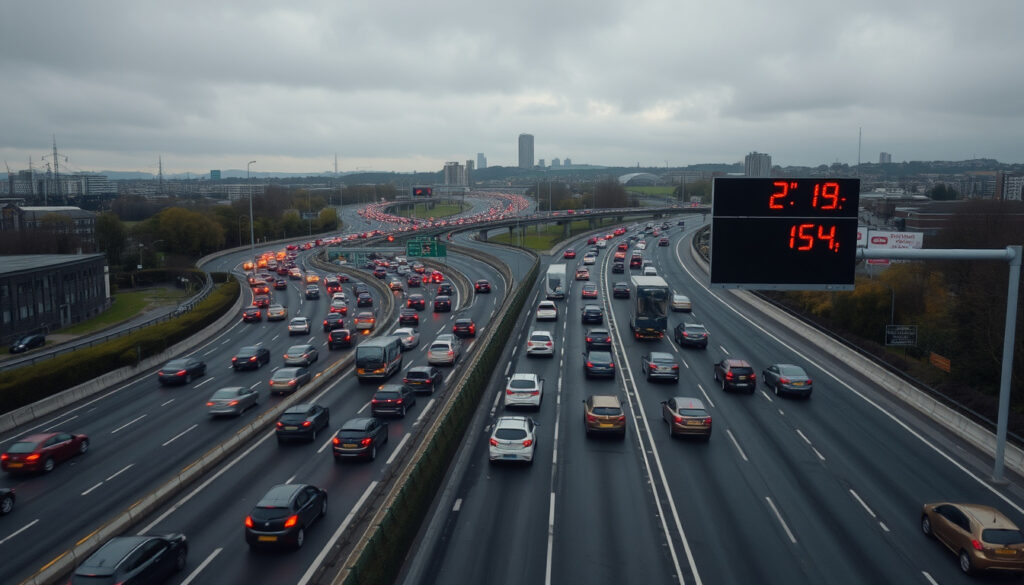
Live Traffic Update Dublin – Real-Time Maps, M50 and Delays
Dublin’s road network experiences significant pressure throughout the day, with the M50 orbital motorway and city centre corridors serving as primary arteries for thousands of commuters. Real-time traffic monitoring helps drivers make informed decisions about routing and departure times.
The Transport Infrastructure Ireland (TII) operates a comprehensive traffic management system that aggregates data from multiple sources, including loop sensors, CCTV cameras, and incident reports. This article provides current conditions based on official data and explains how residents and visitors can access live updates.
Understanding traffic patterns requires knowledge of both recurring congestion hotspots and unexpected incidents. The information below reflects conditions reported by official sources as of the latest updates.
What is the current traffic in Dublin?
Those seeking current traffic conditions in Dublin should consult the TII Traffic Map, which serves as the primary official resource for real-time road status across the Greater Dublin Area. The map displays incidents, roadworks, travel times, message signs, and weather-related advisories in a single interface.
Dublin City Centre experiences heightened congestion during traditional peak hours, typically between 07:30 and 09:30 in the morning and 16:30 to 18:30 in the evening. Major approach routes including the Quays, O’Connell Street, and Grafton Street area see substantial volume increases during these windows.
For those planning journeys, the M50 Concession website provides live travel times that can help estimate journey duration under current conditions. Dublin City Council also operates a traffic information service with updates broadcast on LiveDrive 103.2FM on weekdays excluding bank holidays.
- City centre routes typically see 15-25 minute delays during peak periods
- Dublin Tunnel (Port Tunnel) operates traffic metering in the south bore during busy periods
- Average speed cameras are enforced throughout the Dublin Tunnel system
- Road conditions can deteriorate rapidly following incidents or adverse weather
- Official sources recommend checking multiple platforms for comprehensive coverage
- Social media accounts including @GardaTraffic and @TIITraffic provide rapid incident updates
Traffic conditions change rapidly throughout the day. For the most current information, officials recommend checking traffic.tii.ie directly, particularly during periods when traffic metering or roadworks may affect flow.
| Road | Status | Last Update |
|---|---|---|
| M50 (Full Route) | Varies by section | Check M50 Concession |
| Dublin Tunnel (Port Tunnel) | Open with metering possible | dublintunnel.ie |
| N11 (Stillorgan) | Check TII for current status | traffic.tii.ie |
| M1 (Airport Route) | Check TII for current status | traffic.tii.ie |
| City Centre Quays | Congestion likely during peaks | DCC Traffic News |
| O’Connell Street | Congestion likely during peaks | DCC Traffic News |
Dublin city centre traffic update
Dublin city centre traffic management falls under the jurisdiction of Dublin City Council, which operates a traffic control room providing updates through multiple channels. The council maintains a network of traffic signals and CCTV cameras that feed real-time information to their operations centre.
Key city centre arteries include the River Liffey quays, which handle substantial north-south traffic flows, and O’Connell Street, which serves as a primary northbound route from the city centre. Grafton Street and surrounding areas experience pedestrian-heavy conditions that can affect vehicle movement.
Dublin traffic delays now
Current delays in Dublin stem from a combination of factors including peak-hour congestion, roadworks, and unpredictable incidents. The TII maintains a comprehensive events list that includes active roadworks, incidents, and other conditions affecting travel times.
MapAlerter provides alerts for road closures, diversions, and hazards including flooding and fallen trees across Dublin City Council areas. Users can subscribe to notifications via SMS, email, or through the live map interface.
AA Roadwatch offers 24/7 live traffic reports for Dublin roads, including the M50. Drivers can call 84322 or 0906 88 84322 for verbal updates on current conditions before departing.
Is there heavy traffic on the M50?
The M50 serves as Dublin’s primary orbital motorway, connecting multiple key routes including the M1, N11, M11, and M7. This circular motorway experiences heavy traffic throughout extended hours due to the volume of cross-city journeys it handles.
The M50 Concession website provides live travel times that allow drivers to assess current conditions before beginning their journeys. These updates reflect actual measured travel times rather than estimated values, offering practical guidance for trip planning.
Any traffic incidents in Dublin today
Traffic incidents in Dublin range from minor breakdowns to serious collisions that require lane closures and emergency response. The Dublin Tunnel has experienced recent operational issues, including a southbound collision that required lane closure with subsequent reopening.
A prior breakdown in the Dublin Tunnel south bore required left lane closure, though this has since been cleared and the lane reopened. Drivers should note that such incidents can create residual delays even after the immediate hazard has been removed.
Port tunnel traffic live
The Dublin Tunnel, commonly referred to as the Port Tunnel, provides a dedicated route connecting Dublin Port to the M50 motorway. This 4.5 kilometre twin-bore tunnel is specifically designed for heavy goods vehicles and buses with more than 25 seats, with a maximum clearance of 4.65 metres.
Traffic metering operates in the south bore during busy periods to manage flow and prevent congestion within the tunnel structure. Drivers should check traffic.tii.ie when planning journeys that include the tunnel to understand current metering status.
Average speed cameras are enforced within the Dublin Tunnel to maintain safe speeds and smooth traffic flow. A recent full closure occurred on Thursday, April 9, from 21:30 to 04:30, which has since been resolved.
The Dublin Tunnel has strict vehicle restrictions. Only trucks and buses with more than 25 seats may use the facility. Private vehicles must use alternative routes such as the city centre roads or the East Wall Road.
Live traffic map Dublin
Accessing a live traffic map for Dublin is straightforward through official channels operated by Transport Infrastructure Ireland. The primary resource is traffic.tii.ie, which provides an interactive map view displaying current road conditions across the network.
The TII Traffic Map includes several layers of information that users can enable or disable based on their needs. These include incidents, active roadworks, travel times, CCTV camera feeds, variable message signs, and weather-related advisories.
Best traffic app for Dublin
Several applications provide comprehensive traffic information for Dublin roads. The choice of application depends on whether users prioritize real-time mapping, alert subscriptions, or specific route monitoring.
The MapAlerter application offers a live map and alerts widget specifically for road events across Ireland. The app provides push notifications for subscribed users, along with historical data that can help understand typical patterns on particular routes.
For M50-specific information, the M50 Concession site delivers focused updates on this critical motorway. Dublin Tunnel users should bookmark dublintunnel.ie for status information directly from tunnel operators.
- TII Traffic Map (traffic.tii.ie) – comprehensive official resource
- MapAlerter – alerts and live map with push notifications
- M50 Concession – focused M50 travel time data
- Dublin Tunnel Site – Port Tunnel status updates
- Dublin City Council Traffic News – city centre updates
All major official traffic resources are accessible via mobile browsers, allowing drivers to check conditions before departing or when en route. Bookmarking the most relevant sources ensures quick access when needed.
Dublin airport road traffic
The primary road routes to Dublin Airport include the M1 motorway from the north and the R132 (Old Airport Road) from the city centre. The M50 provides indirect access via junction 2 or the M1 interchange. Traffic volumes on these routes vary significantly based on time of day and day of week.
Airport-related traffic typically increases on Sunday evenings and Monday mornings due to business travel patterns, as well as during holiday periods when leisure travel peaks. Construction or roadworks on approach routes can extend journey times considerably during these periods.
Roadworks affecting Dublin traffic
Active roadworks throughout Dublin can affect traffic flow on major routes. TII maintains a list of current roadworks that drivers should review when planning journeys, particularly for trips during off-peak hours when works are often scheduled.
Dublin City Council publishes information about works affecting city roads through the MapAlerter platform, which allows users to filter for specific types of disruption including roadworks, closures, and temporary traffic management arrangements.
For those considering vehicle ownership, understanding typical traffic patterns can inform decisions about commuting needs and route planning.
Last 24 hours: Dublin traffic timeline
The following summarises reported traffic events affecting Dublin roads over the past 24 hours based on official sources.
- Thursday, April 9 – Dublin Tunnel: Full closure implemented from 21:30 to 04:30 for scheduled maintenance or incident response. Closure has since been resolved with normal operations resumed.
- Recent – Dublin Tunnel South Bore: Southbound collision resulted in Lane 1 closure. Emergency services responded and cleared the incident with lane reopened to traffic.
- Recent – Dublin Tunnel South Bore: Prior breakdown in south bore required left lane closure. This incident has been cleared and the lane reopened.
- Ongoing – Traffic Metering: Dublin Tunnel south bore continues to experience active traffic metering during peak periods to manage tunnel flow.
- Ongoing – Camera Enforcement: Average speed cameras remain active throughout the Dublin Tunnel system.
Conditions on other major routes including the M50 and city centre corridors evolve throughout the day. Current status should be verified through the TII Traffic Map for the most accurate picture.
Established facts and current uncertainties
Established information
- Dublin Tunnel (Port Tunnel) connects Dublin Port to M50
- Dublin Tunnel is restricted to HGVs and buses over 25 seats
- Tunnel length is 4.5 kilometres with 4.65m clearance
- Average speed cameras enforce limits in the tunnel
- Traffic metering operates in the south bore during busy periods
- TII operates the primary traffic map for Dublin
- MapAlerter provides alerts for Dublin City Council area
Information requiring verification
- Current M50 travel times and specific congestion levels
- Active roadworks locations outside major incidents
- City centre real-time traffic density
- Airport route current conditions
- Specific delay durations on affected routes
- Weather conditions affecting road surface conditions
The dynamic nature of road traffic means that conditions can change within minutes. Drivers are advised to check official sources immediately before travelling rather than relying on information from hours earlier.
Understanding Dublin traffic management
Dublin’s traffic management system involves multiple agencies operating in coordination to maintain flow across the metropolitan road network. Transport Infrastructure Ireland oversees the national primary road network including the M50, while Dublin City Council manages local roads within the city boundary.
The integration of technology into traffic monitoring has improved the speed at which incidents are detected and responded to. CCTV coverage, automatic incident detection systems, and crowd-sourced data all contribute to building a comprehensive picture of current conditions.
Peak traffic periods in Dublin typically align with working hours, with the heaviest congestion occurring between 08:00 and 09:30 in the morning and 17:00 and 18:30 in the evening. Weekend patterns differ, with Saturday afternoon often seeing elevated volumes on shopping and leisure routes.
Construction projects regularly affect traffic flow in the Dublin area, with major infrastructure developments sometimes requiring lane closures or temporary re-routing that extends beyond standard peak hours.
Sources and official channels
Official traffic information for Dublin is available through several primary channels operated by government bodies and authorised concession holders.
For the most current details, consult traffic.tii.ie directly, as conditions like metering or works change rapidly throughout the day.
- TII Traffic Map – comprehensive official road status
- Dublin Tunnel – tunnel-specific status and restrictions
- M50 Concession – M50 travel time data
- Dublin City Council Traffic News – city road updates
- TII Events List – incidents and roadworks
- MapAlerter – alerts and live map
Social media accounts operated by traffic authorities provide rapid updates during incidents. The accounts @GardaTraffic, @DCCTraffic, and @TIITraffic post current information on their respective platforms.
Summary and key takeaways
Dublin traffic conditions can be monitored effectively through official channels operated by TII, Dublin City Council, and authorised service providers. The TII Traffic Map serves as the most comprehensive single resource, displaying incidents, roadworks, travel times, and camera feeds across the Dublin road network.
For those travelling to or from Dublin Airport, monitoring the M1 and R132 routes provides the most relevant information, though the M50 interchange at junction 2 can affect access from other directions. The MapAlerter platform offers subscription-based alerts that can notify users of disruptions on specific routes.
Those considering vehicle ownership in Ireland may find it helpful to research vehicle values and depreciation patterns as part of their planning, particularly given the costs associated with regular commuting through congested areas.
How often are Dublin traffic updates refreshed?
Official traffic information from TII updates continuously throughout the day. The TII Traffic Map refreshes in real-time as incidents are reported and resolved. For the most current data, check the source directly before travelling.
What causes most Dublin traffic congestion?
Peak-hour congestion in Dublin primarily results from the volume of commuters travelling simultaneously on limited road capacity. Incidents, roadworks, and adverse weather can compound baseline congestion at any time.
Are there traffic cameras on the M50?
The M50 has CCTV cameras operated by TII that feed the traffic map. Average speed cameras are also present in the Dublin Tunnel section. These help monitor conditions and enforce speed limits.
What is the speed limit in the Dublin Tunnel?
The Dublin Tunnel operates with average speed cameras that enforce the posted speed limit. Drivers should observe all signage within the tunnel and maintain consistent speeds for both safety and compliance.
Can private cars use the Port Tunnel?
No. The Dublin Port Tunnel is restricted to heavy goods vehicles and buses with more than 25 seats. Private vehicles must use alternative routes such as the East Wall Road or city centre approach roads.
How do I check M50 traffic before travelling?
The M50 Concession website provides live travel times for the motorway. The TII Traffic Map also shows current M50 conditions including incidents and travel times.
Where can I find banking services near major traffic routes?
Major routes in Dublin pass near numerous banking facilities. Those planning journeys may find it useful to locate nearby Bank of Ireland branches for any banking needs during their travels.
More related posts
 Arsenal 5-0 Leeds United: Full Match Report & Highlights
 Minimum Wage for 16 Year Old Ireland 2026: Rates, Hours & Tax
 Volcanoes in Iceland Near Reykjavik – 5 Closest Sites, Maps & Tours
 World Darts Championship 2026: Schedule, Results & Prize Money
 Audi RS6 for Sale in Ireland: Used Cars & Prices
 Pulpo a la Gallega Recipe – How to Cook Galician Octopus
 Who I Exempt from Property Tax in Ireland? 2026-2030 LPT Exemption
 Free Things to Do in Dublin: 20+ Attractions & Tips