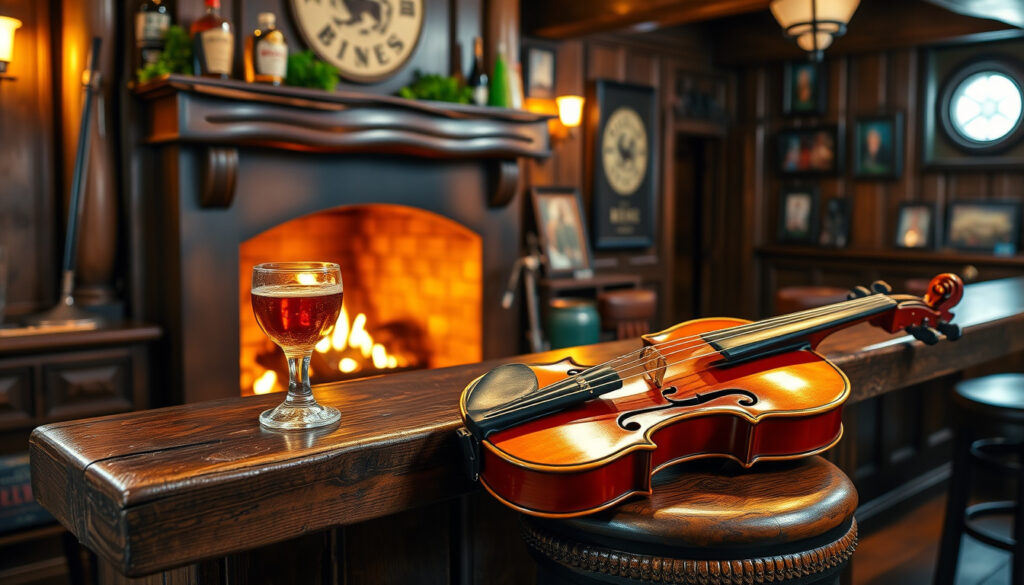
Why Is Temple Bar Famous? Traditional Music & Whiskey
Few places in Dublin split opinion quite like Temple Bar. Visitors pack its cobblestone lanes for live music and whiskey, while many locals shrug it off as an overpriced tourist trap. This article peels apart the genuine cultural quarter from the commercialised image, using official records, local voices, and a good dose of honest context.
Year of Establishment (The Temple Bar pub): 1840 ·
Whiskey varieties available: 450+ ·
Known for: Traditional Irish music and craic ·
Location: Dublin, Ireland
Quick snapshot
- Historic pub and cultural quarter in Dublin (Wikipedia — community-edited encyclopedia)
- Known for traditional music and nightlife (The Temple Bar Pub — pub’s official history)
- The pub dates back to 1840 (The Temple Bar Pub — pub’s official history)
- Exact etymology of “Temple Bar” — family name or sandbar reference (Ireland.com — Ireland’s official tourism board)
- Whether it is the absolute biggest tourist trap in Ireland (Reddit — community discussion platform)
- Current ownership details — privately held, no public confirmation (Ireland.com — Ireland’s official tourism board)
- 17th century: Area develops as cultural quarter (Ireland.com — Ireland’s official tourism board)
- 1840: Temple Bar pub opens (The Temple Bar Pub — pub’s official history)
- 1991: Regeneration after European Capital of Culture (Introducing Dublin — travel guide)
- Balancing tourism volume with local culture remains an open question (Reddit — community discussion platform)
- Alternative pubs gaining traction among visitors seeking authenticity (The Temple Bar Pub — pub’s official history)
- Ongoing debate about commercialisation versus preservation (Reddit — community discussion platform)
Six key facts, one pattern: Temple Bar’s fame rests on a tangle of genuine history, clever marketing, and word-of-mouth buzz that has shaped its dual identity as cultural gem and tourist magnet.
The table below sums up the key details at a glance.
| Attribute | Detail |
|---|---|
| Established (pub) | 1840 |
| Location | Dublin, Ireland |
| Famous for | Whiskey variety and traditional music |
| Known nickname | The most famous pub in Dublin |
| Area | Temple Bar cultural quarter |
| Named after | Sir William Temple (17th century) |
| Viking presence | From 795 AD |
| European Capital of Culture | 1991 |
| Traditional music | Live daily |
| Whiskey varieties | 450+ |
| Customs house established | 1707 |
| Easter Rising | Pub remained open 1916 |
Why does everyone go to Temple Bar?
Traditional Irish music and craic
- The Temple Bar Pub states it has “become a home of traditional Irish music” in Dublin (The Temple Bar Pub — pub’s official history).
- Live sessions run every day, drawing crowds from early afternoon until late (The Temple Bar Pub — pub’s official history).
- For many visitors, this is the main draw — the promise of spontaneous fiddle-and-whistle sessions in a pub that has hosted them for generations.
The trade-off: the music is authentic, but the crowd around you is almost entirely tourists with phones out, which changes the atmosphere entirely.
Vast whiskey and beer selection
- The pub claims to hold “the largest collection of whiskies in Ireland” (The Temple Bar Pub — pub’s official history).
- More than 450 different whiskies are reportedly available (Questo — tourism app).
- That range — from standard blends to rare single malts — makes it a destination for whiskey enthusiasts, even if the prices are steep.
A whiskey lover faces a paradox: the selection is unmatched, but the cost per glass and the elbow-to-elbow bar mean you won’t exactly savour the experience slowly.
Central location in Dublin
- Temple Bar sits on the south bank of the River Liffey, bounded by Dame Street, Westmoreland Street, and Fishamble Street (Wikipedia — community-edited encyclopedia).
- It is a five-minute walk from Trinity College, Dublin Castle, and Grafton Street, making it unavoidable for most sightseeing itineraries.
The pattern: convenience drives volume. When the pub is steps from everything, it becomes the default stop — for better and worse.
What is the significance of the Temple Bar?
Historical origins as a pub
- The Temple Bar Pub’s licence was issued in 1840 (The Temple Bar Pub — pub’s official history).
- P. J. Hartnett became the new owner in 1880, and the property was sold to Patrick and Bridget Ramsbottom in 1894 (The Temple Bar Pub — pub’s official history).
- Some accounts trace the licence back to 1835, when Cornelius O’Meara acquired the premises, with James Farley developing it into a public house by 1840 (Questo — tourism app).
What this means: the pub has operated continuously for nearly 180 years, surviving famine, rebellion, and the transformation of the neighbourhood around it.
Role in Dublin’s cultural quarter
- The broader Temple Bar area is promoted as Dublin’s cultural heart (Wikipedia — community-edited encyclopedia).
- Its modern regeneration accelerated after Dublin was named European Capital of Culture in 1991 (Introducing Dublin — travel guide).
- Today the district houses galleries, street performers, markets, and the Irish Film Institute alongside the pubs.
The catch: the same regeneration that saved the area from decline also paved the way for the souvenir shops and chain bars that locals now complain about.
Controversy over tourist saturation
- On Reddit’s r/Dublin forum, one user described the crowd outside the pub as people who were “tricked into coming” (Reddit — community discussion platform).
- The area was featured in a 2023 Casago report listing the biggest tourist traps worldwide.
- Many Dubliners simply avoid Temple Bar altogether, viewing it as a zone designed for one-time visitors rather than regulars.
Temple Bar is simultaneously the most famous pub district in Ireland and the place that many Irish people tell tourists to skip.
Why is Temple Bar called Temple Bar?
The Temple family connection
- The name is commonly attributed to Sir William Temple, who built a house and gardens there in the early 1600s (Ireland.com — Ireland’s official tourism board).
- The Temple family owned the land, and the area took their name over time.
Meaning of “Bar” in Irish context
- The word “Bar” in this context may refer to a sandbar in the River Liffey, originally called the “Temple sandbar” (Ireland.com — Ireland’s official tourism board).
- The exact etymology remains uncertain — both the family-name and geographic explanations are cited by different sources.
The pattern: even the name of the place carries ambiguity, which feels fitting for a district that defies easy labels.
Is Temple Bar an area or a pub?
The Temple Bar district
- Temple Bar is first and foremost a neighbourhood on the south bank of the River Liffey in central Dublin (Wikipedia — community-edited encyclopedia).
- It is bounded by the Liffey to the north, Dame Street to the south, Westmoreland Street to the east, and Fishamble Street to the west (Wikipedia — community-edited encyclopedia).
- The district is known for its nightlife, arts scene, and cultural institutions.
The Temple Bar pub itself
- The pub called “The Temple Bar” sits at the heart of the district, at 48 Temple Bar Street (The Temple Bar Pub — pub’s official history).
- When people say “I went to Temple Bar last night,” they usually mean the pub, not the entire quarter.
- The pub is described as one of the most photographed buildings in Ireland (Questo — tourism app).
The implication: the confusion between area and pub actually fuels the fame — tourists think they’re visiting a historic district, but the Instagram shot is always the same red front door.
How old is Temple Bar?
The pub’s establishment in 1840
- The Temple Bar Pub’s licence was issued in 1840, making it nearly 180 years old (The Temple Bar Pub — pub’s official history).
- Some sources suggest the licence traces back to 1835, when Cornelius O’Meara acquired the premises (Questo — tourism app).
- The pub remained open during the Easter Rising in 1916, reportedly serving customers even as gunfire broke out nearby (Questo — tourism app).
A pub that stays open through an armed rebellion sets a tone — Temple Bar has been a constant through Irish history’s most turbulent chapters.
The area’s history dating back to the 17th century
- Vikings were present in the area as far back as 795 AD, with remains of their defences near Dublin Castle (Ireland.com — Ireland’s official tourism board).
- Sir William Temple built his house in the early 1600s, giving the area its name (Ireland.com — Ireland’s official tourism board).
- A customs house was established in 1707, and warehouses, taverns, and brothels grew up around it (Tenon Tours — Irish tour operator).
- After the customs house moved north in 1791, the area went into decline and remained rundown through the 19th and 20th centuries (Tenon Tours — Irish tour operator).
Upsides
- Authentic traditional Irish music sessions daily (The Temple Bar Pub — pub’s official history)
- Massive whiskey selection (450+ varieties) (Questo — tourism app)
- Central location, walking distance from main sights
- Historic atmosphere and architecture dating to 1840 (The Temple Bar Pub — pub’s official history)
Downsides
- Very expensive — pints cost well above Dublin average
- Extremely crowded, especially during peak tourist season (Reddit — community discussion platform)
- Locals often avoid it, calling it a tourist trap (Reddit — community discussion platform)
- Not the most authentic Irish pub experience for those seeking locals
Timeline of Temple Bar’s development
- 17th century: Temple Bar area develops as a cultural and commercial quarter (Ireland.com — Ireland’s official tourism board)
- 1707: Customs house established in Temple Bar, bringing trade and activity (Tenon Tours — Irish tour operator)
- 1791: Customs house moves north; area enters decline (Tenon Tours — Irish tour operator)
- 1840: The Temple Bar pub opens on Temple Bar Street (The Temple Bar Pub — pub’s official history)
- 1880: P. J. Hartnett becomes owner of the pub (The Temple Bar Pub — pub’s official history)
- 1894: Property sold to Patrick and Bridget Ramsbottom (The Temple Bar Pub — pub’s official history)
- 1916: Pub remains open during the Easter Rising (Questo — tourism app)
- 1991: Dublin named European Capital of Culture; Temple Bar regeneration begins (Introducing Dublin — travel guide)
- 20th–21st century: Tourism boom; Temple Bar becomes a major destination, raising concerns about over-commercialisation
- 2023: Featured in lists of biggest tourist traps worldwide (Casago report)
What we know and what remains unclear
Confirmed facts
- The Temple Bar pub was established in 1840 (The Temple Bar Pub — pub’s official history)
- It offers over 450 varieties of whiskey (Questo — tourism app)
- It features live traditional Irish music daily (The Temple Bar Pub — pub’s official history)
What’s unclear
- Exact etymology of “Temple Bar” — family name vs. sandbar origin (Ireland.com — Ireland’s official tourism board)
- Whether it is the absolute biggest tourist trap in Ireland (Reddit — community discussion platform)
- Current ownership details — privately held, no public confirmation
“Each person outside it was tricked into coming.”
— Reddit user, r/Dublin (Reddit — community discussion platform)
“Unrivaled craic & service, incredible traditional Irish Music all day everyday.”
— The Temple Bar Pub website (The Temple Bar Pub — pub’s official history)
“The Temple Bar Pub offers over 450 different kinds of whiskey.”
— The Green Hotel blog (Dublin travel guide)
For travelers visiting Dublin, the choice is clear: stop by Temple Bar for a quick look and a souvenir pint, but head to a quieter pub like The Palace Bar or The Stag’s Head for the real session. For locals and long-term visitors, the district still holds cultural value in its galleries and markets — if you can dodge the hen parties. Temple Bar is not a scam; it’s an honest reflection of what happens when a genuinely historic place meets global tourism demand without a filter.
Related reading: Best Hotels in Dublin · Free Things to Do in Dublin
For those planning a visit, finding the right accommodation near Temple Bar can make all the difference in enjoying the area’s vibrant atmosphere.
Frequently asked questions
Is Temple Bar worth visiting if I’m on a budget?
It depends. If you want one pint and a photo of the red front, it’s worth a quick stop. But if you’re watching your wallet, you’ll pay significantly less at pubs just a few streets away. Many locals suggest skipping the Temple Bar pub itself and visiting bars on nearby Dame Street or South Great George’s Street for better value.
How can I avoid the tourist trap experience at Temple Bar?
Visit during a weekday afternoon instead of weekend evenings. Go for the live music, not the Instagram photo. Try less crowded pubs in the same district, such as The Palace Bar (which also has traditional music) or The Porterhouse for craft beer. The street performers and markets during the day offer a more relaxed vibe.
What are the best alternative pubs to Temple Bar for authentic music?
Try The Palace Bar on Fleet Street, O’Donoghue’s on Merrion Row, or The Cobblestone in Smithfield. These pubs are known for genuine traditional Irish music sessions without the heavy tourist markup. The Brazen Head, Dublin’s oldest pub (est. 1198), also offers live music and a more historic setting.
What time do the traditional music sessions start?
At the Temple Bar Pub, live music typically starts around midday and runs continuously until close. In smaller pubs, sessions often begin in the early evening, around 6 PM or 9 PM. Times can vary by season and day of the week, so it’s worth checking ahead.
Is Temple Bar safe at night?
Yes, the area is generally safe due to high foot traffic and a visible Garda (police) presence. However, like any busy nightlife district, it attracts pickpockets and drunken behaviour. Keep your belongings secure, stay in well-lit areas, and exercise normal caution. The main risk is overpaying for drinks, not personal safety.
Can I find Temple Bar souvenirs elsewhere cheaper?
Absolutely. The shops in Temple Bar district charge a premium for the same Guinness caps, wool sweaters, and key rings you can find on O’Connell Street or in the George’s Street Arcade for less. If you want a souvenir, walk two blocks north or south and compare prices before buying.
More related posts
 Staycity Aparthotels Dublin City Centre: Booking & Reviews
 Spin the Wheel of Names – Free Online Random Picker Guide
 Aer Lingus Flights to Lanzarote: Routes, Deals & Timetables
 When Do the Clocks Go Back in 2026? Ireland & UK Dates
 Clayton Car Park Dublin Airport: Rates, Discounts & Shuttle Info
 Hug in a Box Ireland: Compare Top Providers & Prices
 Cork to Limerick Bus: Timetables, Prices & Operators 2025
 Before I Go to Sleep: Plot Twist, True Story & Review