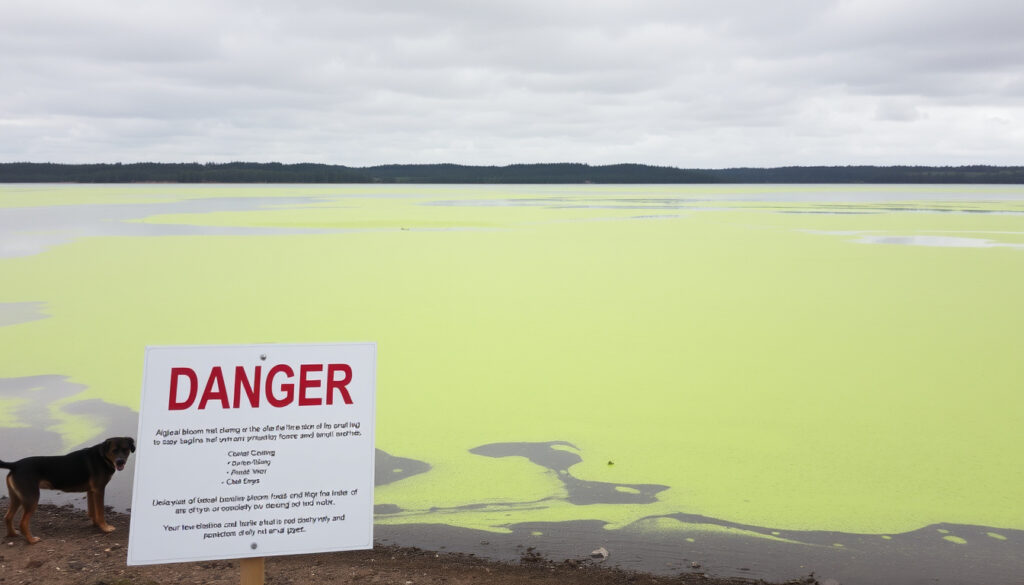
Mayo Algal Blooms Lake Dog Warning | Cyanobacteria Safety Guide
A walk by Lough Conn with your dog should be a peaceful escape, not a race to the vet. Yet in October 2025, Mayo County Council confirmed toxic cyanobacteria blooms in several lakes — and for dog owners, the stakes couldn’t be higher.
Reported locations in Mayo (2025): Gortnorabbey, Lough Conn, Callow Lake · Toxicity risk to dogs: Can be fatal within hours · Official warning issued: Mayo County Council, October 2025 · Cyanobacteria type: Blue-green algae (cyanobacteria)
Quick snapshot
- Cyanobacteria blooms are present in Mayo lakes as of October 2025, per Mayo County Council, official local authority
- Blooms can be fatal to dogs within hours, per VCA Animal Hospitals, veterinary network
- Exact duration of bloom toxicity in individual lakes beyond warning period
- Precise number of dog poisoning cases in 2025 from these specific blooms
- Initial warning May 2024; updated detection October 17, 2025, per Mayo County Council
- Continued monitoring by Mayo County Council; pet owners should check for updates before visiting lakes
Four facts from the official warning tell the story of a recurring threat.
| Fact | Detail |
|---|---|
| Affected locations | Gortnorabbey, Lough Conn, Callow Lake, Mayo |
| Date of warning | October 17, 2025 (updated) |
| Risk level | Fatal to animals if untreated |
| Official source | Mayo County Council |
The pattern: each fall, still water and warm spells create conditions that turn a quiet lake into a hazard zone for pets.
Mayo’s dog owners cannot rely on visual cues alone — blooms can appear suddenly and shift with wind. Without a dedicated emergency protocol in the official warnings, families with dogs need their own response plan.
Can dogs get sick from the algae bloom?
What is cyanobacteria toxicosis?
- Cyanobacteria — often called blue-green algae — are microscopic organisms that produce potent toxins. When they bloom, the water can look like green paint or pea soup.
- Dogs get sick by ingesting or even swimming in contaminated water. Because they lick their fur afterward, the toxin enters the digestive system rapidly, according to the CDC, federal health agency.
- Mayo County Council confirmed toxic blooms at Gortnorabbey, Lough Conn, and Callow Lake, and explicitly instructs owners to wash pets immediately after any contact, per Mayo County Council.
Idaho’s Department of Environmental Quality notes that pets, livestock, and wildlife are especially prone because they are more likely to swim in or drink affected water, per Idaho DEQ, state environmental regulator.
The implication: a dog does not need to drink a lot — even a few laps or a quick swim can deliver a fatal dose.
Cornell University’s Riney Canine Health Center states there is no antidote for blue-green algae poisoning, per Cornell University, veterinary research institution. That makes prevention and immediate first aid the only line of defense.
How long does it take for a dog to get sick from blue-green algae?
Immediate symptoms timeline
- Symptoms can appear within 15 minutes to a few hours after exposure, per the MSPCA, animal welfare organisation.
- Common first signs: vomiting, foaming at the mouth, diarrhea (including bloody or black stool), pale or yellow gums, low blood sugar, low protein levels, and bleeding, per VCA Animal Hospitals.
- Advanced signs include muscle rigidity, tremors, seizures, weakness, collapse, respiratory distress, and bluish or discolored gums, per the MSPCA.
The speed of onset depends on how much toxin the dog ingests and the concentration in the water. High-concentration blooms can lead to death within hours.
The implication: if your dog shows any of these signs after a lake visit in Mayo, you do not have the luxury of “wait and see.”
Because initial symptoms (vomiting, diarrhea) mimic common stomach upsets, owners may mistake poisoning for a minor illness. By the time seizures or collapse appear, veterinary intervention is far less effective.
What to do if a dog swims in blue-green algae?
Emergency steps for pet owners
- Rinse immediately. Use clean, fresh water to wash your dog thoroughly, especially the fur and paws. The Illinois EPA recommends soap and clean water, per Illinois EPA, state environmental agency.
- Prevent licking. Do not let your dog lick its fur until fully bathed — that’s how most toxins enter the system.
- Call a veterinarian urgently. Tell them your dog was in contact with a suspected cyanobacteria bloom. Mayo County Council advises contacting a vet quickly, per Mayo County Council.
- Provide fresh drinking water before walks near lakes. A thirsty dog is far more likely to gulp lake water.
- Keep your dog on a lead. Do not let them investigate scummy shorelines or puddles near the lake.
The Washington State Department of Ecology adds that people should rinse off with clean water and seek appropriate medical attention after possible exposure, per Washington State Department of Ecology, state environmental regulator. The same principle applies to dogs — but faster.
What this means: acting within minutes can mean the difference between a full recovery and a fatal outcome. There is no home remedy.
What does a toxic algae bloom do to humans?
Human health impacts of harmful algal blooms
- Exposure to cyanobacteria blooms can cause skin irritation, respiratory problems, and gastrointestinal illness in humans, per the Montana Department of Environmental Quality, state environmental agency.
- Severity depends on the toxin type and duration of exposure. The CDC notes that different toxins affect the liver, nervous system, or skin, per the CDC.
- Official warnings from Mayo County Council advise avoiding contact with affected water entirely.
The pattern: a bloom that looks like a harmless green slick to an adult can be a lethal dose for a dog.
The Oregon Veterinary Medical Association notes that cyanobacteria advisories can indicate cyanotoxins at levels safe for human recreation but still unsafe for pets, per the Oregon Veterinary Medical Association, veterinary professional body.
Timeline of key events
- : Initial blue-green algae warning issued by Mayo County Council.
- : Independent.ie, major Irish editorial outlet reports dog owner warning about fatal toxins in rivers.
- : New blooms detected; Mayo.ie issues ‘Algae Warning 2025’ update, per Mayo County Council.
The implication: the recurrence from 2024 to 2025 shows this is not a one-off event. Dog owners in Mayo need a standing routine — not just a reaction to breaking news.
What’s known and what’s not
Confirmed facts
- Cyanobacteria blooms are present in Mayo lakes as of October 2025, per Mayo County Council, official local authority.
- Blooms can be fatal to dogs within hours, per VCA Animal Hospitals, veterinary network.
- Mayo County Council advises washing pets immediately after contact, per Mayo County Council.
What’s unclear
- Exact duration of bloom toxicity in individual lakes beyond warning period.
- Precise number of dog poisoning cases in 2025 from these specific blooms.
Until local surveillance data is published, owners must treat every lake with a bloom advisory as a no-go zone for their dog.
Expert perspectives
“Wash pets immediately if they come into contact with water suspected to be contaminated with cyanobacteria.”
— Mayo County Council official statement
“Dog owners in Mayo warned of harmful toxins in rivers which could cause fatalities in animals.”
— Independent.ie report (2024)
These two voices — local government and an editorial watchdog — reinforce the same message: speed matters more than anything.
For a dog owner in Mayo, the choice is clear: keep your dog on a lead near any lake, rinse them with fresh water before they can lick their fur, and call a vet at the first sign of vomiting or lethargy. The blooms will return; a prepared owner saves a life.
Frequently asked questions
What are the first signs of blue-green algae poisoning in dogs?
Vomiting, foaming at the mouth, diarrhea (possibly bloody), pale gums, weakness, seizures, and collapse. Onset can be within 15 minutes to a few hours.
Can dogs die from swimming in algae blooms in Mayo?
Yes. Cyanobacteria toxins can kill dogs within hours if ingested. There is no antidote. Immediate veterinary care is critical.
Is it safe to walk dogs near lakes with algae warnings?
No. Official warnings advise avoiding all contact with affected water. Keep dogs on a lead and provide fresh water before the walk to discourage drinking lake water.
How can I identify a harmful algal bloom?
Look for green, blue-green, or reddish scum on the water surface that looks like paint or pea soup. It may also form foamy mats along the shore. When in doubt, avoid the water.
What should I do if my dog drinks lake water during a bloom?
Rinse your dog with fresh water immediately, prevent licking, and contact your veterinarian urgently. Do not wait for symptoms to appear.
More related posts
 Al Nassr vs Al Akhdoud: Head-to-Head, Prediction & Stats
 Crystal Palace vs Millwall: South London Derby History
 How Long to Boil Chicken Breast: Perfect Timing for Juicy Results
 National Concert Hall 2026 Events: Concerts, Dress Code & Guide
 Hug in a Box Ireland: Compare Top Providers & Prices
 FC Porto Guide: History, Squad, Tickets & Stadium
 Sweaty Betty Swiftie Running Cap: Worth the Price
 Qatar Airway Dublin Terminal: Complete Terminal 1 Guide